


- Maintenance
- 6 Minute Read
Are Landlords or Tenants Responsible for Maintenance Tasks?
Updated on Sep 1, 2025
Written By:
Verified By:

SingleKey recently gathered data from more than a thousand tenants asking who they thought was responsible for specific maintenance tasks, spanning small jobs, like changing a light bulb, to more significant repairs, such as furnace or water heater maintenance, that require the skills of a professional.
Maintaining a home with routine upkeep will prevent the home’s value from declining and help avoid more significant future repair costs. Learn about tenant responses, how landlords can efficiently manage routine maintenance, and the tenant’s expectations.
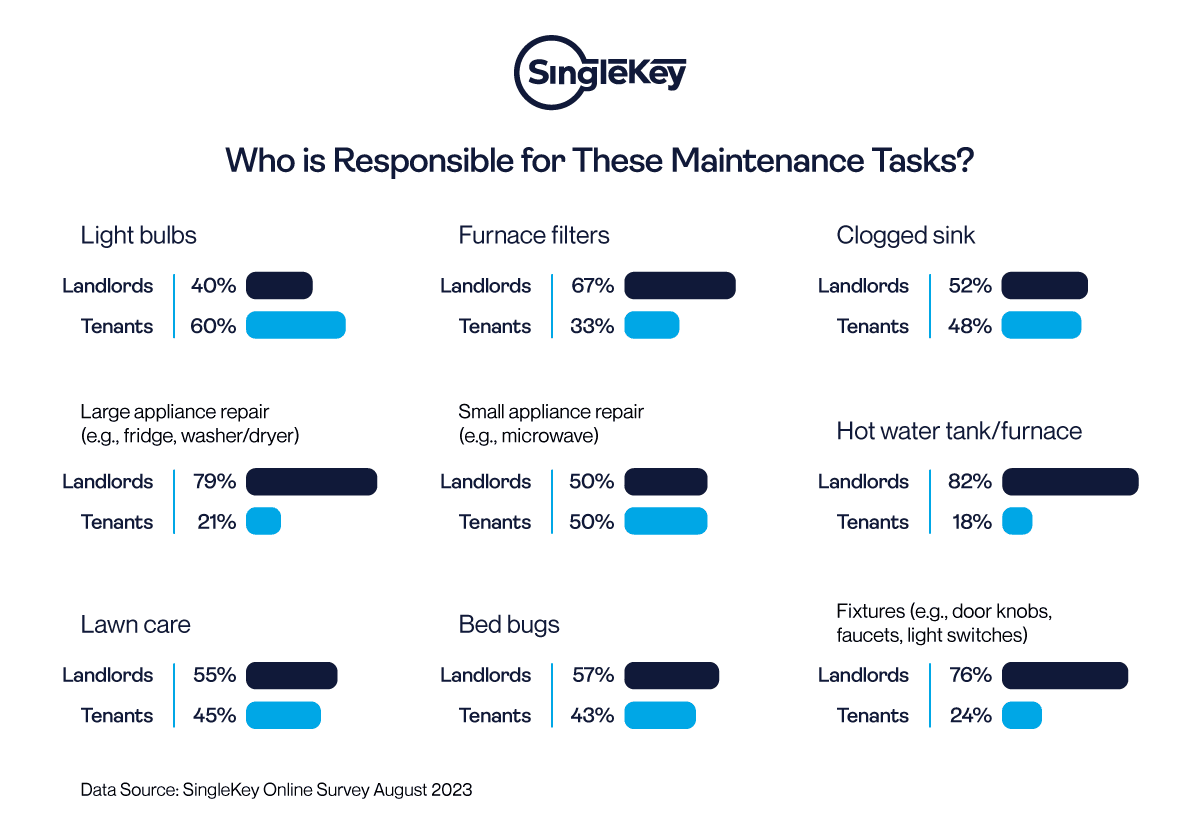
Do tenants or landlords handle maintenance responsibilities?
Maintenance Task
Landlords
Tenants
Results
Light bulbs
40%
60%
Tenants
Furnace filters
67%
33%
Landlords
Clogged sink
52%
48%
Landlords
Large appliance repair
79%
21%
Landlords
Small appliance repair
50%
50%
Landlords
and Tenants
Hot water tank/furnace
82%
18%
Landlords
Lawn care
55%
45%
Landlords
Bed bugs
57%
43%
Landlords
Fixtures (e.g., door knobs, faucets, light switches)
76%
24%
Landlords
There are many instances where it would be unusual for a landlord to visit a rental to complete mundane maintenance tasks such as changing a lightbulb, plunging a toilet, or cleaning interior spaces. More than half of our survey respondents agree that the responsibility of changing and purchasing a light bulb belongs to the tenant. While 48% of tenants said that the tenant is responsible for unclogging a sink, 52% said this job should be tasked to the landlord.
If a tenant needs to enlist the help of a landlord for a clogged sink, the landlord will usually call on a plumber, which can be pricey. When your tenant reports a clogged sink, walk them through some easy-to-do steps to assess the problem before you get involved.
First, ask them to remove the sink stopper and remove any grime or hair causing the blockage. Second, see if they can unclog the drain with a sink plunger. If none of these steps work, the last step before calling a plumber would be to remove the p-trap with a pipe wrench and clear out any obstruction––however, this final step may be tricky for many tenants.
Most landlords manage rental property maintenance, but what that entails may vary from what state and national laws regulate the agreed-upon lease terms.
Be responsive to your tenant’s maintenance requests. You can often walk them through the maintenance issues or address them yourself if the problems are minor before hiring a professional. The property manager should hire a professional for major repairs, like handling plumbing fixtures, water damage, mold issues, or seasonal maintenance tasks.
Outlining major and minor repairs in the lease terms
All tenant maintenance requests should be handled by the landlord professionally and promptly. Give the renter proper notice of when they can expect a maintenance visit. Whether your tenants live in a single-family dwelling or an apartment complex, the rental agreement should state which maintenance responsibilities, including minor and major repairs, the landlord is responsible for.
In Ontario and Alberta, the landlord has to comply with the landlord responsibilities in the Residential Tenancies Act (RTA) even if the lease terms do not list RTA rules, which include maintaining electrical, plumbing, heating systems, and appliances.
State and local laws govern each U.S. state. In Texas, landlords must make reasonable repairs within a timely manner––at most seven days. Landlord responsibilities in Florida largely depend on what’s agreed on in the lease terms and what type of rental unit the landlord is managing. If there is no applicable building code, the landlord’s responsibility for repairs includes maintaining the plumbing, roof, windows, screens, floors, steps, porches, exterior walls, and foundations. In all states, landlord-tenant laws require a habitable condition with hot water and heating.
Replacing light bulbs and unclogging a garbage disposal may seem like a menial, easy repair, but for some people, this could present an issue for them based on their circumstances. It is up to the landlord’s discretion If they want to establish a relationship with the tenant and agree to help them with minor repairs and maintenance, such as:
- Replacing light bulbs
- Replacing furnace filters
- Clogged toilets that can be resolved with a plunger
- Clogged garbage disposal
The landlord needs to ensure everyone is aware of their responsibilities.
Ultimately, your goal is to guarantee a rental income and to protect the property’s value by overseeing major repairs and managing the overall maintenance schedule. Some repairs and maintenance that commonly fall upon the landlord include:
- Gutter cleaning
- Large appliance repairs
- Lawn care
- Bed bugs
- Pest control
- Fixtures and faucets
Once the tenant moves out, it’s up to the property manager to refresh the rental’s appearance and repair normal wear to the rental property caused by the previous tenancy.
Landlords are not responsible for minor appliance repairs or replacements, including:
- Microwaves
- Coffee makers
- Air fryers
Defining the maintenance terms in the rental agreement will avoid any misunderstanding between you and the tenant.
Tenant maintenance responsibilities
Despite the landlords bearing the brunt of many more substantial maintenance responsibilities, residents must also keep the rental clean and maintain certain areas of the property. For example, a tenant is responsible for removing garbage from a dwelling, maintaining sanitary conditions, and removing snow from the property, with the exception of roofs. It’s considered a liability for the tenant to remove snow and ice from the roof, and the property owner is risking damage to the structure. When snow or ice accumulates on a roof, it can cause minor to severe damage, such as causing the roof to collapse.
The landlord is responsible for maintaining a habitable living condition for the tenant. Some seasonal maintenance tasks are better for the landlord to handle or to hire professionals to manage.
Creating a maintenance calendar for residential properties
Before the initial move-in inspection, formulate an annual maintenance checklist.
Month-to-month maintenance checklist:
- Does the rental need monthly pest control services?
- Does the rental need monthly lawn care?
Seasonal maintenance checklist:
- Schedule gutter cleaning during spring and fall
- Schedule snow removal services for winter
- Check the basement for water leaks once the snow thaws
Annual maintenance checklist:
- Have the air conditioner serviced
- Schedule an electrical inspection that meets housing codes
Having a list of vetted professionals at the ready will make scheduling services virtually effortless. As a landlord, when there is a property-related crisis, you want to be able to act quickly without worrying about researching the right tradesperson. Landlords can evaluate service repair professionals by inquiring about time frames, asking to see permits, requesting a written estimate, and, most notably, reading reviews.
Examine the difference between a good plumbing quote and a questionable one for your investment property.
FAQ: Who is responsible for rental property maintenance tasks?
The tenant’s biggest responsibility is paying rent on time and complying with the lease terms.
Landlords are responsible for managing major and minor repairs, including plumbing, heating, roofing, mold, and flooding issues.
Landlords are responsible for placing tenants, collecting rent, and ensuring the rental property has not fallen into disrepair.
Our final thoughts
To help increase your chances of finding a trustworthy and reliable tenant to look after your rental property and pay rent on time, turn to a service like SingleKey, which can help you screen tenants based on their credit score, a public records scan, previous landlord references, and more.
Learn more about Maintenance
Learn more about Maintenance
 You Are Reading
 Other Blog Posts In This Series
- How to Manage Rental Property Maintenance Issues
- How to Conduct a Rental Inspection (Checklist Included)
- The Ultimate Preventative Property Maintenance Checklist
- Rental Property Maintenance Costs: How Much Should I Budget?
- Property Management Maintenance: 5 Tips to Keep Costs Down
- Rental Repairs: DIY or Hire a Pro?
- How to Winterize a House: Working With Your Tenants
- Who Should Supply Maintenance Equipment: Tenants or Landlords?
- Are Landlords or Tenants Responsible for Maintenance Tasks?
- Does the Quality of Rental Maintenance Increase When Rent Prices Rise?
- How Fast Should a Landlord Act to Fix Mold Issues?
- Is Rent Withholding Legal If Landlords Don’t Make Repairs?
- How to Find a Drywall Contractor for Your Rental Property
- How Landlords Can Choose a Roofing Contractor
- Hiring a Landscaper for Your Rental Property
- Rental Repairs and Maintenance: What is a Landlord Responsible For?
- Finding an Electrician for Your Rental
- How to Manage the Rental Property Lawn
- How Landlords Can Interview Furnace Repair Companies
- How Landlords Can Hire an Affordable Plumber for Their Rental Property
- Hiring a Repair Person for Your Driveway and Sidewalk Needs
- Hiring an HVAC Contractor and Keeping Up With Maintenance
- Spotting Foundation Issues in Your Rental Property
- Finding a Pool Service for Your Investment Property
- Finding a Painter for Your Rental Property