
- Laws & Regulation
- 24 Minute Read
Ontario rental deposits: What landlords can charge
Updated on Nov 4, 2026
Written By:
Verified By:
When renting out a property in Ontario, landlords need to know which deposits they can collect, how much they can charge and when those payments are due. Collecting first and last month's rent is common, but Ontario has specific rules about how these payments work and what landlords can use them for.
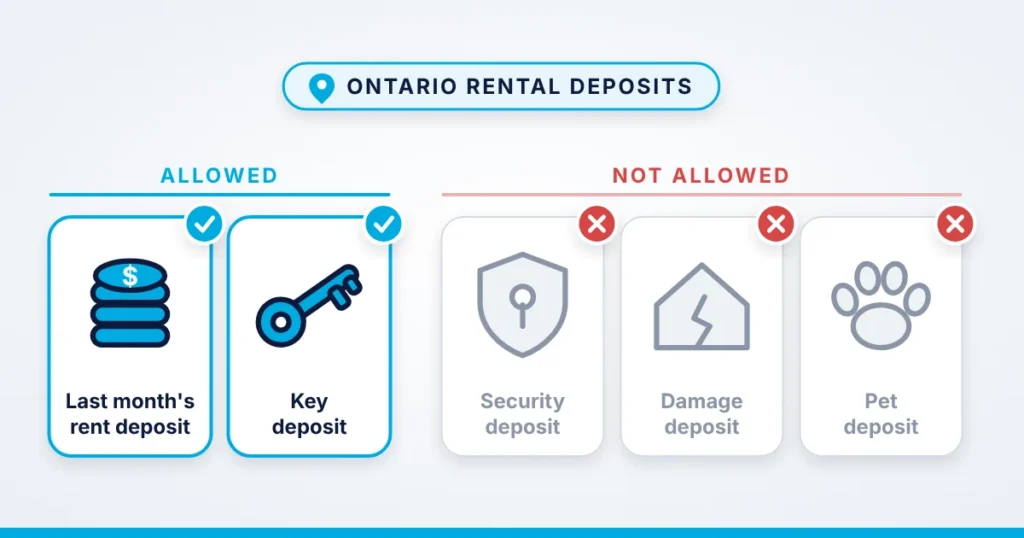
First month's rent covers the start of the tenancy, while the last month's rent deposit is reserved for the final rental period. Landlords can also collect a refundable key deposit, but they can't require a separate security or damage deposit. Collecting a payment that isn't allowed can lead to a tenant filing an application with the Landlord and Tenant Board (LTB) to recover the money.
That raises a practical question: what happens if a tenant stops paying rent or causes damage to the property? First and last month's rent have specific purposes, so those payments won't necessarily cover the costs you face when something goes wrong. Knowing what you can legally collect, and what those payments are meant to cover, is part of preparing for the financial responsibilities of renting out a property. In practice, a deposit works more like a prepayment than protection, so the steps you take before and after move-in matter just as much.
This guide explains Ontario's rental deposit rules, including how first and last month's rent work, when payments can be collected and how deposit interest is handled. We'll also look at the steps landlords can take to manage risks that deposits don't cover.
Renting out a unit in Ontario? Review your applicant's credit, income and rental history with SingleKey Tenant Screening before you collect any payment. Start screening →
What rental deposits can landlords charge in Ontario?
Ontario allows two kinds of deposits: a last month's rent deposit and a refundable key deposit. They serve different purposes, so the limits on each are different too, as the table shows.
| Deposit type | Allowed? | Maximum amount | How it's used | Interest required? |
|---|---|---|---|---|
| Last month's rent deposit | Yes | One rental period's rent, up to one month | Pays for the final rental period | Yes |
| Refundable key deposit | Yes | Expected direct replacement cost | Refunded when keys, fobs or access cards are returned | No |
| Security deposit | No | Not permitted | N/A | N/A |
| Damage deposit | No | Not permitted | N/A | N/A |
| Pet deposit | No | Not permitted | N/A | N/A |
The rent deposit is capped at one rental period's rent, up to one month, which means a weekly tenancy has a one-week limit. Key deposits follow a different logic. They're based on what the keys, fobs or access cards cost to replace, so a higher monthly rent or a more expensive property doesn't justify a bigger key deposit.
These restrictions apply whatever you call the payment. Renaming a prohibited damage deposit, or writing it into the lease, doesn't make it legal, and a tenant who paid one can apply to the Landlord and Tenant Board (LTB) to recover the money.
How does first and last month's rent work in Ontario?
First month's rent pays for the start of the tenancy, while last month's rent is a deposit you hold for the final rental period. On a unit renting for $2,500 per month, that means collecting $2,500 for the first month and holding another $2,500 for the last.
Important note: Although you've collected $5,000, the deposit isn't available for repairs or missed rent payments during the tenancy because it's already reserved for the final rental period.
The deposit also doesn't necessarily cover month 12 of the original lease. If your tenant stays after a one-year lease and continues renting month to month, you keep holding the deposit, and it pays for whatever turns out to be their actual final rental period.
When do you pay first and last month's rent?
If you want to collect a rent deposit in Ontario, you need to make it a requirement on or before the day you enter into the tenancy agreement. First month's rent is due under the agreement's payment terms, so the two payments don't have to arrive at the same time. A tenant who signs a lease in June for a September move-in could pay the deposit at signing and the first month's rent when the tenancy begins. Whatever schedule you choose, make the amounts and dates clear before signing and label each payment in your records, so both of you can tell what was paid as rent and what's being held as a deposit.
Can you ask for a larger deposit?
No. The rent deposit can't exceed one rental period's rent, up to one month, even if an applicant's financial history worries you. If something in an application raises questions, the time to deal with it is before you agree to the tenancy. Verify the applicant's information, talk through any gaps and review their rental history against your lawful screening criteria. A larger deposit wouldn't settle those concerns, and requiring one would go against Ontario's deposit rules.
Do landlords have to pay interest on last month's rent in Ontario?
Yes. Ontario landlords must pay interest on the last month's rent deposit every 12 months, using the province's annual rent increase guideline, and that applies even to rental units that aren't subject to the guideline's limit on rent increases. For an annual interest payment due in 2026, the guideline is 2.1%, so on a $2,500 deposit the calculation would be:
$2,500 × 2.1% = $52.50
That means you'd owe the tenant $52.50 in rent deposit interest for the year. The guideline can change annually, so check the rate that applies when the interest is due instead of reusing the previous year's percentage.
What happens when the rent increases?
When you lawfully increase the rent, you can also require the tenant to top up their last month's rent deposit to match the new amount. Instead of paying out the interest and then collecting money back, you can apply the interest you owe toward that increase. With the same $2,500 deposit, a 2.1% rent increase would raise the monthly rent to $2,552.50, and applying the $52.50 in interest brings the deposit up to the new rent without an additional payment from the tenant.
The numbers won't always line up so neatly. You might leave the rent unchanged, or a lawful increase might differ from the guideline used to calculate interest, so work out each amount separately and record how much interest was paid or applied and whether any balance remains. Keeping those records up to date each year is much easier than reconstructing several years of calculations when the tenant moves out, and before you request a deposit increase, our Ontario rent increase guide covers the rules for increasing the rent itself.
Ontario rent deposit interest calculator
Use the rent deposit interest calculator below to estimate the interest owed on the deposit you're holding and compare it with any required top-up.
- Interest owed for the year
- $52.50
- Deposit after applying the interest
- $2,552.50
- Top-up still needed from the tenant
- $0.00
Interest is paid every 12 months at the guideline in effect when the payment is due. The top-up row assumes you apply the interest toward the increase.
What if a tenant stops paying rent?
A missed payment needs attention even when you're holding a rent deposit, because that money is reserved for the final rental period and can't be applied to unpaid rent while the tenancy continues.
A deposit can't do that job.
A typical path looks like this:
- Contact the tenant. Find out what happened and confirm the amount outstanding.
- Keep a record. Note your conversations and any payment arrangements so you can see whether the issue is being resolved.
- Serve an N4 notice. If the tenant doesn't catch up and you need to pursue eviction for unpaid rent, the legal process generally starts with an N4 notice.
- File an L1 application. You may be able to file one if the tenant hasn't paid the required amount or moved out by the notice's termination date.
Serving an N4 is part of the legal process, but it doesn't authorize you to remove the tenant yourself.
Our guide to completing and delivering an N4 notice explains the process in more detail. Because you'll still need to cover ongoing property expenses while you wait for payment, it's worth planning for missed rent before a problem develops.
Missed rent can't come out of the deposit
A last month's rent deposit can't cover unpaid rent during the tenancy. Rent Guarantee covers eligible unpaid rent, property damage and eviction-related expenses, subject to the program's terms. It has to be in place before a problem starts.
Explore Rent GuaranteeCan landlords charge security or damage deposits in Ontario?
No. Security deposits aren't legal in Ontario under the Residential Tenancies Act, and landlords can't collect damage deposits either, but that doesn't leave you without recourse. Tenants can still be responsible for damage they cause deliberately or through carelessness, and that responsibility also extends to damage caused by other occupants or people they allow into the property.
Whether a tenant is responsible depends on the type of damage and how it happened. Flooring that gradually wears down through everyday use is generally considered normal wear and tear, while damage caused by misuse may be treated differently. Before you ask the tenant to pay, review the property's condition records and gather evidence that supports your claim, such as:
- Photos of the damage
- Relevant messages with the tenant
- Repair estimates or invoices
If you can't resolve the issue together, you can apply to the LTB for compensation. Those records help show what changed during the tenancy and support the amount you're requesting, although you may still need to pay for repairs while you wait for reimbursement. Our guide on collecting payment for property damage in Ontario explains the recovery process.
Are pet deposits and key deposits allowed in Ontario?
Pet deposits aren't permitted in Ontario, even when a tenant has more than one pet. If a pet damages the unit beyond normal wear and tear, you can seek payment for the repairs through the appropriate process instead of collecting a deposit in advance.
Key deposits are allowed as long as they're refundable and limited to the expected direct cost of replacing the keys, fobs or access cards you provide. Check the replacement cost before you set the amount and record what you're giving the tenant. If a key is lost during the tenancy, a permitted replacement charge has to stay within the direct replacement cost without an added penalty. At move-out, use your record to confirm what has been returned and refund the deposit when the keys and access devices are handed back.
How can landlords protect themselves without a security deposit?
Since a security deposit isn't an option, protection has to come from other places. Reviewing applications carefully helps you make an informed decision about a tenant, clear agreements and property condition records give you a basis for addressing problems during the tenancy, and financial planning makes sure you can keep paying expenses while rent or reimbursement is outstanding.
Review the application before approving a tenant
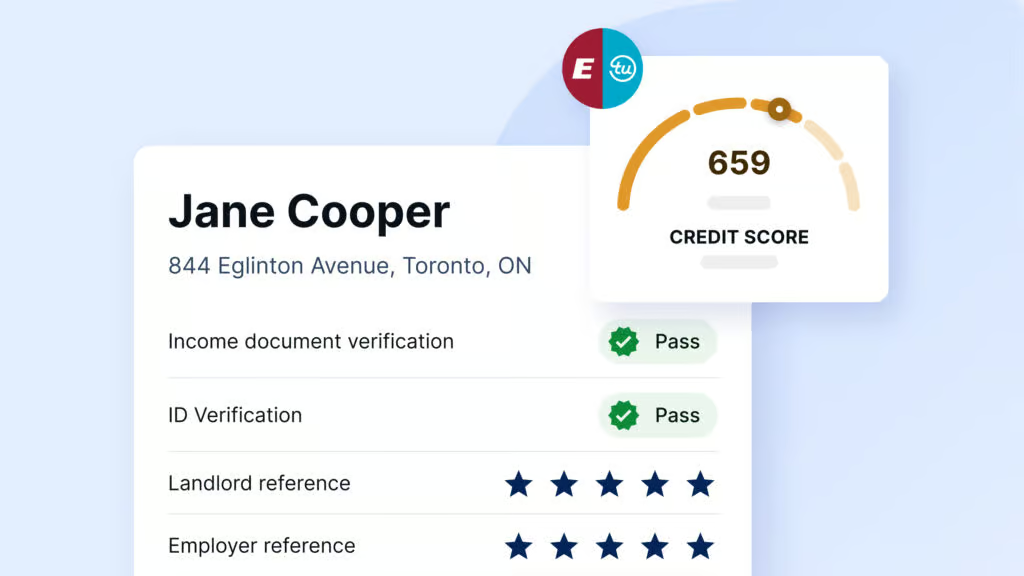
Start by verifying the information in the rental application and considering the applicant's income alongside available credit information and rental history. Each tells you something different about their circumstances, so it's worth reviewing them together instead of relying on a single factor.
These checks must follow Ontario's human rights rules. For instance, having no rental or credit history doesn't automatically mean someone has a poor record, and screening decisions shouldn't rely on assumptions about an applicant's background. SingleKey's Tenant Screening report brings applicant information together to support your review, and you can use it to identify questions that need follow-up and consider the answers in context before making a decision.
Put the agreement and property condition on record
Once you've chosen a tenant, document the agreed rent, payment dates and permitted deposits in the lease. SingleKey's eLease provides a way to prepare the Ontario agreement online.
The lease establishes what you and the tenant agreed to, but it won't show whether a damaged door was already broken at move-in. Before handing over the keys, take dated photos and record any existing damage, and use a rental inspection checklist to document the same areas at the start and end of the tenancy. Keeping both types of records gives you a clearer basis for resolving a disagreement later.
Prepare for losses that screening and records can't prevent
Even after careful screening, a tenant's circumstances can change. Records may help you pursue money owed, but you still need a way to pay the mortgage, taxes and other expenses while you wait for payment.
Setting aside a reserve gives you funds to draw on during that period. Start by calculating your regular property costs, then consider how long you could cover them without rent coming in, which gives you a clearer picture of the amount you need and any gap in your budget.
For additional protection, SingleKey's Rent Guarantee covers eligible unpaid rent, property damage and eviction-related expenses, subject to the program's terms, coverage limits and exclusions. It addresses financial losses that screening and lease documentation alone can't cover.
What happens to the deposits when a tenant moves out?
Each deposit is handled differently when the tenant moves out.
| Item | What happens at move-out |
|---|---|
| Last month's rent deposit | It normally pays for the final rental period, so it isn't returned as a separate refund. Before closing the account, confirm that it has been applied correctly and check for any unpaid deposit interest. |
| Key deposit | You return it when the tenant hands back the keys and access devices. |
| Damage found at the move-out inspection | Document it and address that claim separately instead of treating either deposit as money available for repairs. |
Landlord deposit checklist
Use these steps to keep deposit administration organized throughout the tenancy:
- Before signing: Confirm the permitted deposit amounts and put the payment requirements in the agreement.
- When collecting payments: Record the date, amount and purpose of each payment, keeping rent and key deposits clearly identified.
- Before move-in: Photograph the property's condition and record the keys and access devices provided.
- Each year: Calculate deposit interest and document whether it was paid or applied toward a lawful deposit increase.
- If rent changes: Check whether the deposit needs a top-up after accounting for interest.
- At move-out: Reconcile the final rent and interest, record returned keys and handle any damage claim separately.
Plan for the costs deposits don't cover
Before your next tenancy begins, review how you'd handle a missed payment or an unexpected repair bill. In Ontario, a deposit won't cover either one. Careful screening, useful records and available funds each give you a different way to prepare.
If you want coverage for eligible rental losses, explore SingleKey's Rent Guarantee and review how its protection fits your property's needs.
Protect your rental income with Rent Guarantee
Cover eligible unpaid rent, property damage and eviction-related expenses, subject to the program's terms, coverage limits and exclusions. Rent Guarantee has to be in place before a problem starts.
Explore Rent GuaranteeOntario rental deposit FAQs
Can a landlord ask for first and last month's rent in Ontario?
Yes. Landlords can collect first month's rent and a last month's rent deposit, which can't exceed one rental period's rent, up to one month. If you require the deposit, you need to establish that requirement on or before entering into the tenancy agreement.
Can a landlord ask for a security deposit in Ontario?
No. Ontario landlords can't require a security deposit. The only deposits allowed are the last month's rent deposit and a refundable key deposit, and a tenant who pays something that isn't allowed can apply to the LTB to recover the money.
Can a landlord ask for a damage deposit or a pet deposit in Ontario?
No. Damage deposits and pet deposits aren't permitted, even when a tenant has more than one pet. If a tenant or a pet damages the unit beyond normal wear and tear, you can seek payment for the repairs through the appropriate process, including an application to the LTB.
Can a landlord keep a deposit for breaking a lease in Ontario?
The last month's rent deposit can only pay for the final rental period, and it can't be applied to damage or kept as a penalty. A key deposit is refundable when the keys and access devices are returned. Any other losses have to be pursued separately.
How much interest does a landlord pay on a rent deposit in Ontario?
The interest rate is the province's annual rent increase guideline, which is 2.1% for an interest payment due in 2026. On a $2,500 deposit, that works out to $52.50 for the year. Landlords pay the interest every 12 months, and a key deposit doesn't earn interest.
Related articles