
- Ontario
- 23 Minute Read
Ontario rent increase guidelines for 2026 and 2027
Updated on Oct 6, 2026
Written By:
Verified By:
Ontario's annual rent increase guideline is 2.1% for increases that take effect in 2026 and 1.9% for increases that take effect in 2027. For most rent-controlled units, those rates are the maximum amount a landlord can increase rent without applying to the Landlord and Tenant Board (LTB).
But knowing the maximum increase is only one part of the process. Before you serve notice, you need to make sure the unit is covered by Ontario's rent increase rules, enough time has passed since the last increase, and you've used the correct LTB form.
Here's a quick summary of Ontario's rent increase rules:
- 2026 guideline: 2.1%
- 2027 guideline: 1.9%
- Coverage: most rental units are rent-controlled, but units first occupied for residential purposes after November 15, 2018 are exempt from the guideline
- Timing: at least 12 months since the tenancy began or the last rent increase took effect
- Notice: at least 90 days' written notice before the new rent starts
- Form: Form N1 for most rent-controlled units
Collecting the new rent? SingleKey Rent Collection automates monthly rent payments and reminds tenants before rent is due. Get started →
What is rent control in Ontario?
In Ontario, rent control generally limits how much a landlord can increase rent while the same tenancy continues. For most rent-controlled units, the annual rent increase guideline is the maximum increase a landlord can make without applying to the LTB.
Rent control doesn't mean rent can never go up. It means the increase has to follow Ontario's timing, notice, and guideline rules. The annual guideline is one part of that process, but landlords also need to confirm whether the unit is covered and whether enough time has passed before the new rent can take effect.
Ontario rent increase guidelines by year
If you're looking up a previous year's rental increase guideline, here's a quick reference.
| Year | Guideline |
|---|---|
| 2027 | 1.9% |
| 2026 | 2.1% |
| 2025 | 2.5% |
| 2024 | 2.5% |
| 2023 | 2.5% |
| 2022 | 1.2% |
| 2021 | 0% |
| 2020 | 2.2% |
| 2019 | 1.8% |
| 2018 | 1.8% |
| 2017 | 1.5% |
Ontario updates the annual guideline each year based on the province's formula, subject to the maximum increase allowed under the Residential Tenancies Act.
Can you increase your tenant's rent in 2026 or 2027?
Before calculating a rent increase, start by confirming whether Ontario's annual rent increase guideline applies to the rental unit.
For most private residential rentals covered by Ontario's Residential Tenancies Act, it does. This can include:
- houses
- apartments
- condominiums
- basement apartments
- mobile homes
- land lease communities
- care homes, for the rent portion
Some rental units are exempt from the annual guideline. One of the most common exemptions applies to units first occupied for residential purposes after November 15, 2018. For a deeper explanation of that rule, see SingleKey's guide to Ontario rent control exemptions.
The key phrase is "first occupied for residential purposes." It doesn't refer to when you bought the property, finished renovations, or signed your first lease with a tenant. What matters is when the unit was first lived in as a residence.
That distinction is especially important for newer condos, basement apartments, and additions. If you're treating a unit as exempt, keep records that support it, such as occupancy permits, builder records, warranty documents, or similar documentation.
When can you increase rent?
Once you've confirmed the rental unit is covered by Ontario's annual rent increase guideline, the next step is checking the timing.
In most cases, a rent increase can take effect once:
- at least 12 months have passed since the tenancy began or the last rent increase took effect
- the tenant receives at least 90 days' written notice before the new rent starts
- the correct LTB form is used
If the timing is too early, you can still prepare the increase, but you'll need to adjust the effective date before serving notice.
For example, if your tenant moved in on May 1, 2026, the earliest the rent could usually increase is May 1, 2027. To use that date, the tenant would need to receive the rent increase notice at least 90 days before May 1.
How much notice is required for a rent increase in Ontario?
In most cases, landlords must give tenants at least 90 days' written notice before a rent increase takes effect. The notice period is separate from the 12-month timing rule, so both requirements need to be met.
For example, if the new rent is meant to start on May 1, the tenant needs to receive the rent increase notice at least 90 days before May 1. If the notice is served too late, the effective date should be adjusted.
Should you use the 2026 or 2027 Ontario rent increase guideline?
Use the guideline for the year the new rent starts, not the year you prepare or serve the notice.
For example, if you serve notice in October 2026 but the rent increase doesn't take effect until January 1, 2027, you'd use the 2027 guideline of 1.9%. Even though the paperwork was served in 2026, the tenant starts paying the new rent in 2027.
This is a small detail, but it can affect the rent increase amount. Once you know the effective date, you can use the correct year's guideline to calculate the new rent.
How much can a landlord raise rent in Ontario?
For most rent-controlled units, the maximum allowable rent increase is:
- 2.1% for increases that take effect in 2026
- 1.9% for increases that take effect in 2027
Here's what that looks like for some common monthly rents.
| Current rent | 2026 increase | 2026 new rent | 2027 increase | 2027 new rent |
|---|---|---|---|---|
| $1,500 | $31.50 | $1,531.50 | $28.50 | $1,528.50 |
| $1,800 | $37.80 | $1,837.80 | $34.20 | $1,834.20 |
| $2,000 | $42.00 | $2,042.00 | $38.00 | $2,038.00 |
| $2,400 | $50.40 | $2,450.40 | $45.60 | $2,445.60 |
How to calculate your tenant's rent increase
To calculate the rent increase, multiply the current monthly rent by the annual guideline, then add that amount to the current rent.
For example, if your tenant pays $2,000 per month and the increase takes effect in 2027:
- $2,000 × 1.9% = $38
- $2,000 + $38 = $2,038
The highest new monthly rent would be $2,038. You don't have to increase rent by the maximum amount. Some landlords choose a smaller increase, especially when they have a reliable long-term tenant they'd like to keep.
Just keep in mind that skipped increases don't carry forward. If you decide not to increase rent this year, you can't add that unused percentage onto next year's increase.
Ontario rent increase calculator
Enter the current monthly rent and the year the new rent starts to see the maximum increase under the annual guideline.
- Maximum monthly increase
- $42.00
- New monthly rent
- $2,042.00
- Extra rent over 12 months
- $504.00
Applies to most rent-controlled units. Units first occupied after November 15, 2018 and other exempt units aren't limited by the guideline.
Is taking the full increase always the right decision?
Not necessarily. On a monthly rent of $2,000, the full 2026 increase is $42 per month, or about $504 over the course of a year.
For some landlords, that increase makes sense. For others, it's worth comparing the additional rent to the cost of replacing a good tenant. Even one month of vacancy can cost more than the extra rent you'd collect over the year. Cleaning, repairs, advertising, and leasing time can add to that cost.
That doesn't mean you should avoid the full increase. It just means the annual guideline is a maximum, not a target. A reliable tenant who pays on time and takes care of the property may be worth more over the long run than the difference between a full increase and a smaller one.
How to increase rent in Ontario: forms, notice and steps
Once you've confirmed the unit is covered, checked the timing, and calculated the new rent, the next step is serving the Ontario rent increase notice correctly.
For most landlords, the process looks like this.
Step 1: Choose the right LTB form
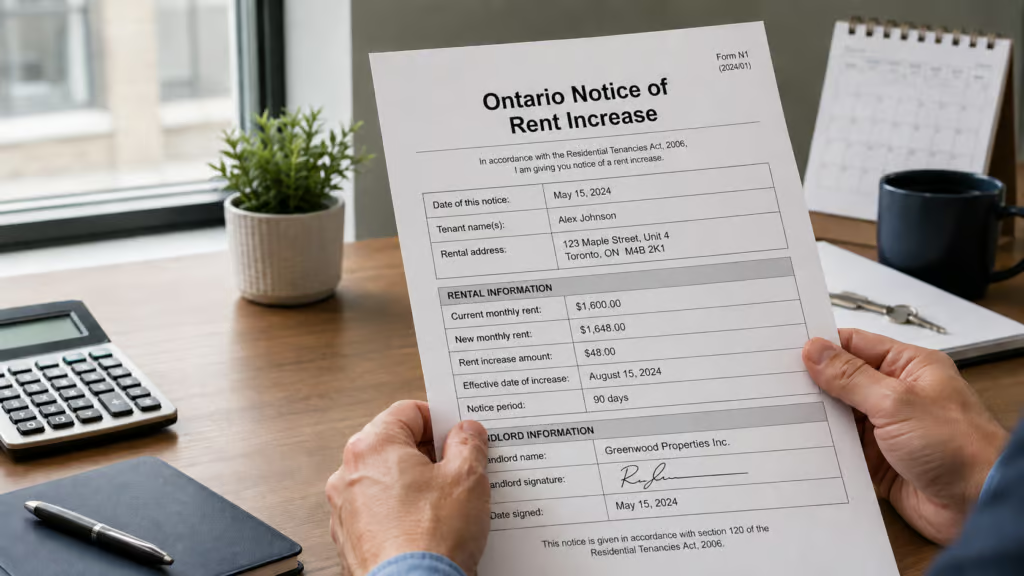
For most rent-controlled units, you'll use Form N1, Notice of Rent Increase.
You'll typically use Form N1 when:
- the unit is covered by Ontario's annual rent increase guideline
- the increase is at or below the annual limit
- at least 12 months have passed since the tenancy began or the last rent increase took effect
Some situations require a different form. If you're organizing other Ontario rental paperwork at the same time, SingleKey's guide to Ontario rental documents can help you keep the notice, lease, and related records together.
| Form | When it's used |
|---|---|
| N1 | Most rent-controlled units |
| N2 | Units that are exempt or partially exempt from the annual rent increase guideline |
| N3 | Care homes |
| N10 | The landlord and tenant agree to an above-guideline increase in situations permitted under Ontario's rules |
| L5 | Applying to the LTB for an above-guideline increase |
For most standard rent increases, Form N1 is the form landlords will use.
Step 2: Double-check the dates before filling out the notice
Before you complete the form, take one last look at the dates.
Confirm that:
- at least 12 months have passed since the tenancy began or the last rent increase took effect
- you're using the correct year's guideline
- the tenant will receive at least 90 days' notice before the new rent starts
This is a quick check, but it matters. A correct calculation won't help if the effective date or notice period is wrong.
Step 3: Serve the Ontario rent increase notice
Once the notice is complete, serve it using a method permitted under Ontario's rules.
Whatever method you choose, keep a copy of the completed notice and a record of when and how it was served. You may never need those records, but they can be helpful if a tenant later says they didn't receive the notice.
Step 4: Tell the tenant what changed
The LTB form is the legal notice, but a short email or letter can make the change easier for the tenant to understand and should explain:
- what the current rent is
- what the new rent will be
- when the new rent starts
- that the official LTB notice is attached
For an example of what to include in the accompanying letter, see SingleKey's guide on how to write a rent increase letter.
Step 5: Update your records
Once the notice has been served, update your lease file so everything stays together.
Keep a copy of the notice, proof of service, the calculation you used, and any records supporting a rent control exemption, if applicable. If you collect rent through SingleKey Rent Collection, update the monthly rent so the new amount begins on the effective date. At that point, the process is complete.
Collect the new rent on time, every month
Set up automatic rent payments, send tenants a reminder before rent is due and track every payment in one place. Free for up to 3 tenants.
Set up Rent CollectionExample: Increasing rent from $2,000 to $2,042
Imagine your tenant:
- moved in on May 1, 2022
- currently pays $2,000 per month
- last had a rent increase on May 1, 2025
Because the last increase took effect on May 1, 2025, the earliest the next increase can usually take effect is May 1, 2026. Since the increase takes effect in 2026, you'd use the 2.1% guideline.
Here's the calculation:
- $2,000 × 2.1% = $42
- $2,000 + $42 = $2,042
The new monthly rent would be $2,042.
From there, you'd complete Form N1 and make sure the tenant receives it at least 90 days before the increase takes effect.
Once you've done it once, every standard rent increase follows the same process: check the unit, confirm the timing, calculate the increase, use the right form, and serve the notice on time.
The mistakes landlords make most often
Before serving notice, it's worth checking for common mistakes, such as:
- using the wrong year's guideline
- setting the effective date before 12 months have passed
- giving less than 90 days' notice
- using the wrong LTB form
- assuming a unit is exempt without confirming it
- forgetting to keep proof that the notice was served
A quick review before serving notice can help you avoid correcting the paperwork or restarting the timeline later.
Before your next tenant
Ontario's annual rent increase guideline applies while the same tenancy continues. When that tenancy ends and a new one begins, you're making a different decision.
Instead of asking: How much can I increase the rent?
You're asking: Who should I rent to next?
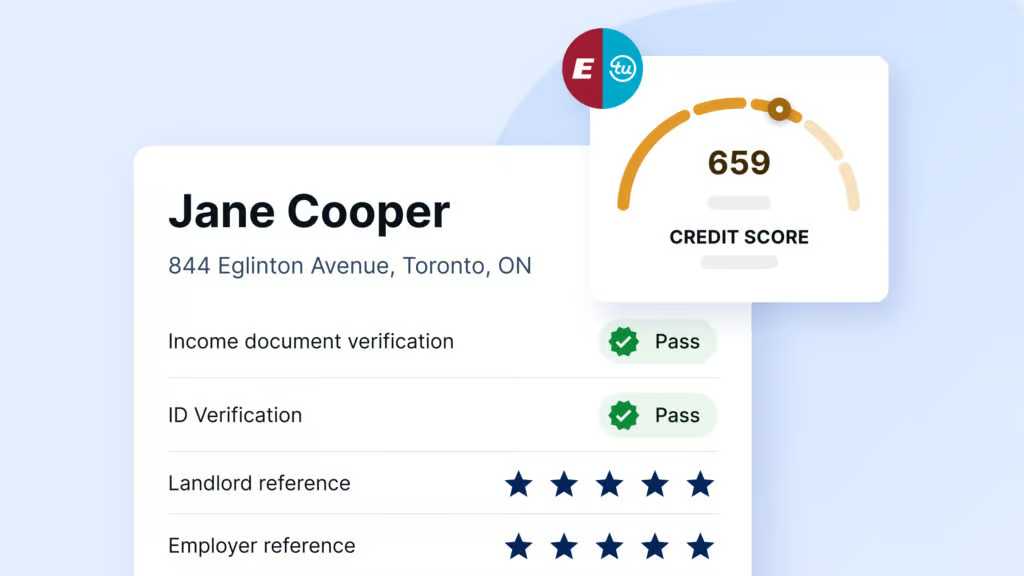
That's one of the biggest financial decisions a landlord makes. A SingleKey Tenant Screening Report can help verify:
- identity
- credit history
- income and employment
- rental history
- references
Choosing the right tenant often has a much bigger financial impact than the difference between a 1.9% and 2.1% annual rent increase.
Screen your next tenant with confidence
Once a tenancy ends, Ontario's annual rent increase guideline no longer determines the starting rent for your next tenant. That's why finding the right tenant is just as important as setting the right rent.
Run a SingleKey Tenant Screening Report to verify credit, income, identity, and rental history before signing a lease.
Screen a tenantOntario rent increase FAQs
Most rent increases are straightforward, but a few situations raise extra questions.
Can you increase rent above the annual guideline?
For most rent-controlled units, the annual guideline is the maximum increase you can make without additional approval.
If you want to increase rent by more than the annual limit, you'll generally need to qualify for an above-guideline increase or another exception under Ontario's rules. Higher market rents or increased expenses alone usually aren't enough.
Above-guideline increases are typically tied to specific circumstances, such as eligible capital work, extraordinary increases in municipal taxes or charges, or increased security service costs. If you believe your situation qualifies, review the LTB requirements before serving notice. The process and supporting documentation are different from a standard annual rent increase.
Is the rent increase different in Toronto?
No. Rent control in Ontario is set by the province, so Toronto landlords follow the same rules as landlords anywhere else in Ontario. For most rent-controlled units, the maximum increase is 2.1% for increases that take effect in 2026 and 1.9% for increases that take effect in 2027, with the same 12-month timing rule, 90 days' notice and Form N1.
Can you increase rent after buying a rental property?
Buying a tenanted rental property doesn't give you a fresh start. In most cases, you take over the existing tenancy, including the current rent, lease terms, and rent increase history.
That also means the rent increase timeline continues where the previous landlord left off. If the last increase took effect six months before you bought the property, you'll generally need to wait another six months before increasing the rent again. Buying the property doesn't restart the 12-month clock.
Before serving a rent increase notice, review the tenancy records to confirm when the last increase took effect and whether the unit is covered by Ontario's annual rent increase guideline.
Can you increase rent when a lease ends?
A fixed-term lease ending doesn't automatically give you a new opportunity to increase rent. In most cases, the tenancy continues month to month under the same terms unless the tenant moves out or both parties sign a new agreement.
If the unit is covered by Ontario's annual rent increase guideline, the same rent increase rules continue to apply. You still need to confirm that enough time has passed since the tenancy began or the last rent increase took effect, and you still need to give the tenant at least 90 days' written notice. For more on renewal timing, see SingleKey's guide to lease renewals.
In other words, the lease term may be ending, but the tenancy usually continues. Before serving notice, check the rent increase timeline rather than relying on the lease end date.
Do month-to-month tenants follow different rules?
A month-to-month tenancy doesn't give landlords more flexibility to increase rent. If the unit is covered by Ontario's annual rent increase guideline, the same timing, notice, and form requirements generally apply.
That means the tenancy may be month to month, but the rent increase rules don't reset. You'll still need to confirm that 12 months have passed, give at least 90 days' written notice, and use the correct LTB form.
Can you increase rent retroactively?
A rent increase applies going forward after the required notice period. If you discover a mistake after serving the notice, you usually can't backdate the increase to recover missed rent.
That's why it's worth checking the dates, guideline year, and notice period before serving anything. If something needs to be corrected, it's better to catch it before the notice is served than after the effective date has passed.
Can a landlord increase rent between tenants?
In many cases, yes. Ontario's annual rent increase guideline generally applies while the same tenancy continues. When one tenancy ends and a new tenant moves in, the landlord and new tenant can usually agree on a new starting rent, subject to Ontario's rental rules.
That doesn't change the rules for the existing tenant. If the same tenancy is continuing, the annual guideline, timing, notice, and form requirements still apply.
What if the tenant questions the increase?
If a tenant questions the increase, start by reviewing the basics before assuming there's a larger disagreement.
Check whether:
- you used the correct LTB form
- at least 12 months have passed
- you used the correct year's guideline
- the tenant received at least 90 days' notice
- the calculation is correct
If those details are accurate, you'll be in a stronger position to explain how the increase was calculated. If you find a mistake, it's usually better to correct it right away than wait for it to become a bigger issue.
Related articles
- How to Raise Rent: The Ultimate Technical Guide
- How to Write a Rent Increase Letter to Your Tenants
- Ontario Rent Control Exemptions: Changes to the RTA in 2018
- Ontario Rental Documents Every Landlord Needs
- Ontario Standard Lease: 17 Sections Explained
- Lease Renewals: Everything You Need to Know as a Landlord
- How to Raise Rent Without Complaints from Tenants
Learn more about resources in Ontario
Learn more about Rent Increase Guidelines
 You Are Reading
 Other Blog Posts In This Series
- How Much Can a Landlord Raise the Rent in Alberta in 2025
- How to Increase Rent in BC in 2026
- Manitoba 2025 Rent Increase Guidelines
- New Brunswick 2025 Rent Increase Guidelines
- Newfoundland and Labrador 2025 Rent Increase Guidelines
- Northwest Territories 2025 Rent Increase Guidelines
- Nova Scotia 2025 Rent Increase Guidelines
- Nunavut 2025 Rent Increase Guidelines
- Ontario rent increase guidelines for 2026 and 2027
- Prince Edward Island 2025 Rent Increase Guidelines
- Quebec 2025 Rent Increase Guidelines
- Saskatchewan 2025 Rent Increase Guidelines
- Yukon 2025 Rent Increase Guidelines