


Tenant screening plays a pivotal role in finding a reliable and trustworthy tenant. But it’s also essential that the process is fair and legal to everyone who applies to rent your property. In Canada, human rights laws protect people from discrimination in the tenancy screening process. Violating these laws will put you at risk of complaints, fines, and tribunal hearings, and possibly a damaged reputation.
In this guide, we’ll cover the relevant laws that govern human rights in Canada and how they influence what you can and cannot do when screening potential tenants. We’ll also outline the characteristics or “protected grounds” that defend applicants from discrimination and show you how to create a screening process that keeps you on the right side of the law.
What are “protected grounds” in Canada?
As a landlord, one of the most important aspects of human rights to understand is “protected grounds“. These are personal characteristics under the Canadian Human Rights Act and similar provincial legislation that protects people from discrimination.
In the context of renting a property, protected grounds ensure that all renters have an equal opportunity to become tenants and receive fair treatment during the tenant screening process.
The following characteristics are protected grounds under the Canadian Human Rights Act:
- Race
- National or ethnic origin
- Colour
- Religion
- Age
- Sex (includes pregnancy and childbirth)
- Sexual orientation
- Gender identity and expression
- Marital status
- Family status
- Genetic characteristics
- Disability
- Conviction for pardoned offenses
These protected grounds align with those outlined in similar legislation at the provincial level. However, there are slight differences that vary by jurisdiction (more on this later).
Applicable legislation: national and provincial overview
Let’s dig a little deeper to understand the human rights laws across Canada and how they affect the tenant screening process. We’ll examine the federal legislation first and see how it varies across the provinces and territories.
Federal human rights law
Human rights laws in Canada are enshrined in the Canadian Human Rights Act. They exist to prevent and resolve cases of unfair discrimination in key areas of life. These areas include employment and access to publicly available goods and services, such as banking, telecommunications, and housing.
The Canadian Human Rights Commission investigates and, where possible, remedies claims of prohibited discrimination. Unresolved cases are handled by the Canadian Human Rights Tribunal, which renders a final decision.
Chapter 1, Section 6 of the Act affects landlords as it guarantees individuals the right to rent property without being subject to unfair discrimination:

So, how does the Canadian Human Rights Act impact tenant screening in practice? Essentially, it’s against the law to:
- Reject an applicant solely based on a protected ground.
- Ask applicants questions during an interview that reference a protected ground (e.g., “What is your country of origin?”)
- Ask applicants to disclose details on a rental application that could be considered discriminatory (e.g., “What is your marital status?”)
- Show preferential treatment to certain classes of renters in rental ads (e.g., asking only individuals of a certain race or religion to apply).
Provincial and territorial human rights law
Provincial and territorial human rights laws largely mirror those at the federal level. However, each province has unique variations, so make sure to familiarize yourself with the protected grounds in your jurisdiction as they relate to housing.
For example, in Ontario, you cannot deny an applicant tenancy based on their source of income (including government financial aid) or on their citizenship. And in Quebec, it’s illegal to reject a potential tenant based on their political beliefs, marital status, language, or social or economic standing.
Check out the links below to learn about the human rights laws in your province, including protected grounds:
- Alberta Human Rights Act
- British Columbia Human Rights Code
- Ontario Human Rights Code
- Quebec Charter of Rights and Freedoms
- Saskatchewan Human Rights Code
- Manitoba Human Rights Code
- New Brunswick Human Rights Act
- Newfoundland and Labrador Human Rights Act
- Nova Scotia Human Rights Act
- Prince Edward Human Rights Act
- Nunavut Human Rights Act
- Northwest Territories Human Rights Act
- Yukon Human Rights Act
Screening dos and don’ts
Now that you have a good overview of human rights laws, let’s look at how they affect the tenant screening process in practice. Below, we discuss what you can and cannot do as a landlord when evaluating potential tenants.
What you can ask and do
Asking the right questions during the screening process is key to narrowing your list and choosing the best candidate. Here are some of the things you can legally ask applicants to provide:
- Basic information (name, date of birth, current address, etc.)
- Employment status (whether the applicant is working full-time, part-time, unemployed, etc.)
- Employment history
- Proof of income (bank statement, tax return, pay stub, etc.)
- Employment and past landlord references
- Residential history
- Consent for a credit and background check
Here are examples of questions you can ask applicants, whether in person or through a rental application.
- When are you expecting to move in?
- How many people will be living with you?
- Do I have permission to do a background check?
- What’s your preferred lease term?
- Have you ever filed for bankruptcy?
- Do you have any pets?
Notice that the requests and questions above don’t violate any protected grounds under the Canadian Human Rights Act and the equivalent provincial legislation.
What you cannot ask and do
Here are examples of questions you can’t ask applicants during the screening process (each violates a specific protected ground):
- Are you planning to have children?
- What is your nationality?
- Are you collecting welfare? (remain neutral by asking for documents that provide proof of income instead)
- What religion do you belong to?
- What is your sexual orientation?
- What political party do you support? (This question could be considered discriminatory in certain provinces.)
Refrain from denying applicants tenancy based on protected characteristics, such as race, sexual orientation, marital status, age, etc. These attributes have no bearing on whether they will be a good tenant. If you’re unsure about the legality of a question or request, play it safe and discard it from your screening process.
How to create a human rights-compliant screening process
Take the time to plan a human rights-compliant checklist into your screening process. In doing so, you’ll avoid blunders that risk getting you into legal trouble. Here are some tips for making your tenant screening fair and equal for everyone.
Use a standardized application form
Eliminate bias by having each potential tenant fill out the same rental application form. Make sure your form captures only relevant details: name, address, employment status, monthly income, rental history, etc. Review each question to ensure it doesn’t transgress any of the protected grounds in your province or territory.
Use objective screening criteria
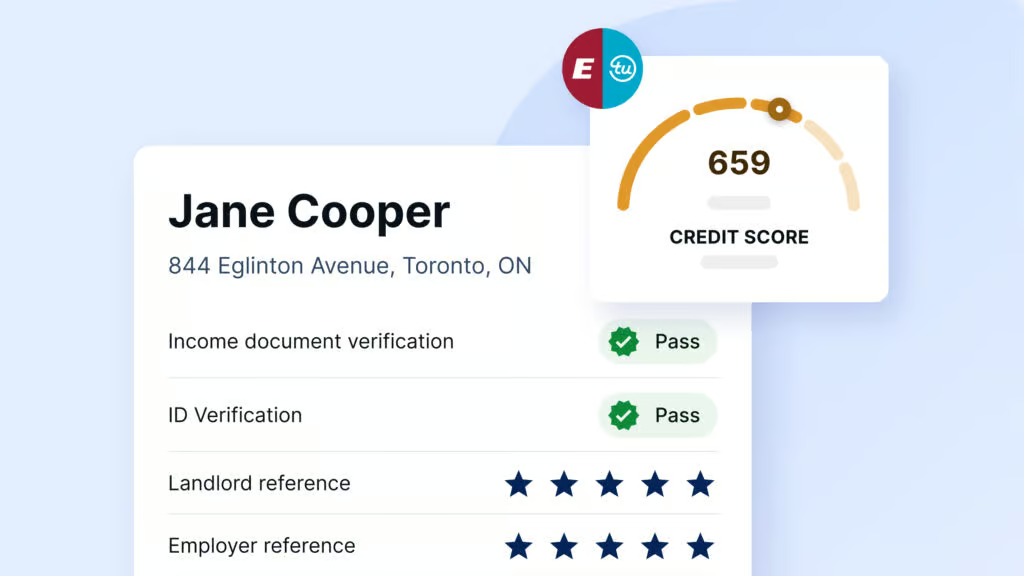
Review details about potential tenants that give you insight into their behavior rather than superficial characteristics like gender, immigration status, and family life. What counts is their ability to pay rent, keep your rental in top shape, and maintain open and honest communication. Some things you can judge applicants on include their credit score, past landlord references, and rent-to-income ratio.
Ensure consistency
Apply the same benchmarks to all applicants during the tenant screening process. For example, you can decide that each applicant must have a credit score that falls in a particular range to qualify. Making arbitrary changes halfway through your search or giving some applicants special treatment increases the risk of choosing a problematic tenant.
Beware of indirect discrimination
Screening criteria that seem harmless on the surface could be a form of indirect discrimination. For example, let’s say you accept only Canadian landlord references. In that case, you risk excluding newcomers to the country, which could amount to discrimination under human rights laws. Instead, be flexible and allow references from foreign landlords.
Document your decisions
Retain all rental applications and screening results to demonstrate transparency and compliance with human rights laws. It’s a habit that can spare you from financial and legal trouble down the road. For example, suppose an applicant you reject for tenancy falsely accuses you of discrimination. If you need to attend a tribunal hearing, you’ll have the evidence you need to justify your decision.
Another example is putting too much emphasis on financial metrics when qualifying an applicant. For example, in Ontario, rejecting an applicant simply because of a low rent-to-income ratio may be considered discrimination against certain classes of people.
Our final thoughts
Proper tenant screening is essential for landing a reliable tenant and protecting your rental property. But it must be done fairly, with care and dignity for all applicants. That’s why human rights laws exist in Canada – to set clear rules about what landlords can and can’t do when selecting tenants.
To avoid accusations of discrimination and legal disputes, learn the human rights legislation in your province or territory. Use this information to create a tenant screening process based on objective benchmarks, such as credit score, income, and landlord references. And document each step in your tenant selection process – it will come in handy should your decision get challenged.
Learn more about Laws & Regulation

