
- Ontario
- 13 Minute Read
Ontario lease agreement: What landlords need to know (2026)
Updated on Oct 6, 2026
Written By:
Verified By:
An Ontario lease agreement is the mandatory, government-issued form that landlords and housing providers must use for most residential rental contracts in the province. Also known as the Ontario standard lease, Ontario standard lease agreement or Residential Tenancy Agreement, this form becomes legally binding once signed and sets out the rights and responsibilities of both landlords and tenants for the duration of the tenancy.
Getting your lease agreement right matters. A lease that is missing key details, uses an outdated form, or includes unenforceable clauses can lead to disputes or delays at the Landlord and Tenant Board. Completing the standard lease correctly helps ensure the agreement meets Ontario's legal requirements and reduces the likelihood of issues later on.
This guide explains what's included in the standard lease, what terms can and can't be added, common mistakes to be aware of, and how to create a compliant Ontario lease agreement online.
Ready to create your lease? Skip the paperwork. Build, sign and send your lease online with eLease, for free. Get started →
What is an Ontario lease agreement?
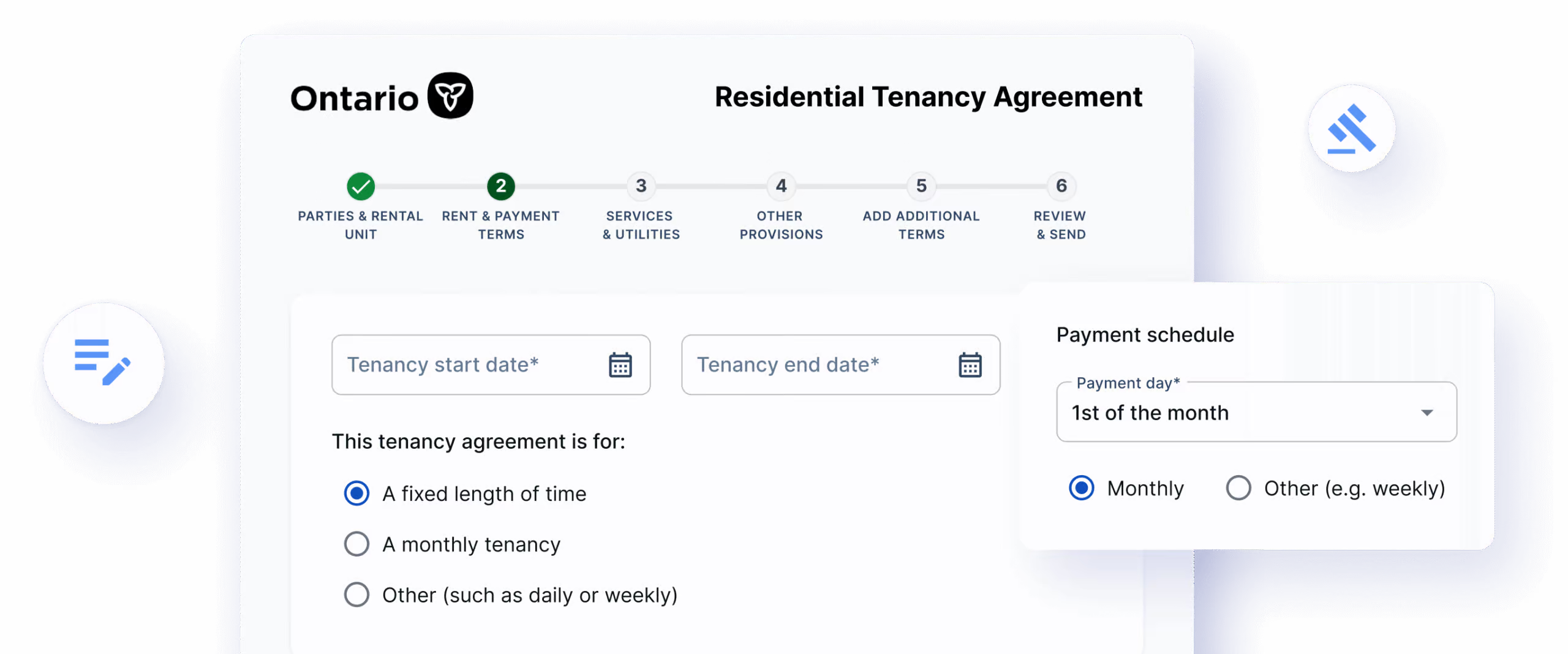
An Ontario lease agreement, also referred to as an Ontario rental agreement, Ontario tenancy agreement or residential tenancy agreement in Ontario, is the official document for residential rentals in the province. Since April 30, 2018, landlords are required to use this form when creating residential rental contracts. For most residential tenancies, using the Ontario standard lease is mandatory. It's formally known as the Residential Tenancy Agreement (Standard Form of Lease).
The lease outlines the terms of the tenancy, including rent, utilities, deposits, maintenance responsibilities and other obligations for both landlords and tenants. It's based on Ontario's Residential Tenancies Act, 2006 (RTA), which means any lease terms that conflict with the Act are not enforceable, even if they appear in the agreement and the tenant has signed it.
Landlords may include additional terms in the lease, but those terms must be consistent with the RTA.
What the Ontario standard lease covers at a glance
The Ontario standard lease is divided into 17 sections, each covering a different area of the rental agreement. While the form is structured, certain areas require more attention than others.
| Lease area | What landlords and tenants need to know |
|---|---|
| Landlord, tenant and rental unit details | Include the full legal names of the landlord and tenants, the rental unit address, parking details and the contact information used for formal notices. |
| Lease term and rent | Add the move-in date, lease type, rent amount, payment details and any lawful charges or discounts. In Ontario, a fixed-term lease usually continues month-to-month after the term ends unless either party gives notice to end it. |
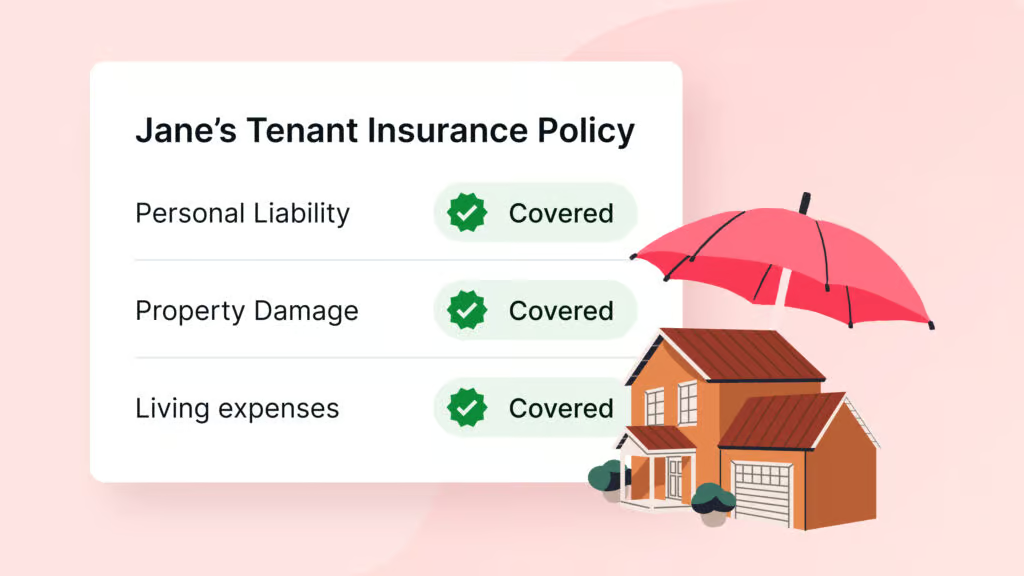
| Deposits and insurance | Ontario landlords can collect a rent deposit, but not a damage deposit, pet deposit or cleaning deposit. You can also require tenant liability insurance, but tenants decide whether to buy contents insurance. |
| Services, utilities and property rules | Clarify what's included in rent, such as utilities, parking, storage, air conditioning or laundry. You can also outline smoking rules, shared space rules, guest parking rules and other property-specific terms, as long as they follow Ontario law. |
| Maintenance, repairs and changes to the unit | Outline the landlord's responsibility to maintain the property and the tenant's responsibility for damage they or their guests cause. It also explains when permission is required for changes to the unit. |
| Subletting, assigning and changes after signing | Tenants must obtain landlord approval to sublet or assign the unit. Any changes to the agreement must be made in writing and agreed to by both parties. |
| Additional terms and signatures | Use the additional terms section for any extra rules that apply to the rental, but do not include anything that contradicts Ontario's Residential Tenancies Act. The landlord and all tenants must sign the lease, and the tenant must receive a copy within 21 days. |
Additional terms: What landlords can and can't add
The standard lease allows landlords to add extra terms, but only within the limits of Ontario's tenancy laws. These terms cannot override the Residential Tenancies Act.
In practice, this means landlords can include certain operational rules, but cannot restrict or remove rights protected under the Act.
You can add
- Garbage disposal rules
- Shared space rules
- Guest parking rules
- Smoking rules for the rental unit or property
You can't add
- Damage deposits
- Pet deposits
- Cleaning deposits
- Blanket bans on pets (except where required by condo rules)
- Rules that prevent tenants from having guests or roommates
- Rules that make tenants pay for repairs that are legally the landlord's responsibility
If a term conflicts with Ontario's Residential Tenancies Act, it will not be enforceable, even if the tenant signs the lease.
Common mistakes Ontario landlords make when creating a lease
Disputes between landlords and tenants can arise from seemingly innocent mistakes that show up in lease agreements. Failing to provide key details, leaving boxes unchecked, adding illegal terms, and other errors can lead to arguments and legal trouble. Here are some common mistakes to avoid when setting up your Ontario rental agreement.
Using an outdated form
Landlords are required to use the current version of the Ontario standard lease, which is included for free in SingleKey's eLease product. The Ontario standard lease was last updated in December 2020 and applies to leases that began in March 2021 or later. Older templates or generic online forms may not meet current requirements.
Adding illegal rules
Some terms are disallowed under Ontario's tenancy regulations, even if your tenant agrees to them. For example, you cannot ban pets on your rental or prevent your tenant from inviting friends to sleep overnight. Be sure to learn what's allowed and what's not in Ontario leases.
Charging a damage deposit
Damage deposits are not allowed in Ontario. Landlords may only collect a rent deposit, typically used for the last month of rent. Any additional deposit type is not permitted under the Residential Tenancies Act.
Forgetting to give tenants a signed copy of the lease
Landlords must provide this within 21 days of signing. If a tenant requests the standard lease in writing and it is not provided within 21 days, they may be entitled to withhold one month's rent until the signed copy is received.
Listing rent or additional charges vaguely
Rent and additional charges should always be clearly outlined. This includes a breakdown of any additional costs such as parking or utilities, to avoid confusion later in the tenancy.
How to create an Ontario lease agreement
There are two ways to create an Ontario tenancy agreement: manually or online.
Manual
Download the Ontario lease form from Ontario.ca, complete each section, attach any additional terms, sign with both parties and provide the tenant a copy. May involve printing, scanning and manual back-and-forth for corrections.
Online with eLease
Build your lease with guided prompts and address auto-fill, customize permitted terms and send for electronic signature. Changes are saved in your SingleKey account. No printing or scanning required.
See how manual leases compare to eLease.
| Feature | Template / PDF | eLease Free |
|---|---|---|
| Speed to complete | Slow. Manual completion takes time. | Fast. Auto-fill and instant corrections. |
| Signing experience | Printed and signed manually. | Electronic signature. |
| Storage | Physical or local files. | Cloud-based storage. |
| Compliance check | Manual review required. | Built-in compliance checks. |
| Legal approval | Review and verify yourself. | 21 pre-approved clauses. |
| Cost | Free. | Free. |
Create your Ontario lease online
eLease provides the fastest and easiest way to create a complete, legally compliant lease agreement in Ontario. Build your lease, customize permitted terms and send it for e-signature, all in one place, completely free.
Get startedThe Ontario standard lease is updated periodically. Always confirm you're using the current form before sending it to a tenant.