

- Being a homeowner
- 11 Minute Read
What’s included in the Ontario standard lease?
Updated on May 15, 2026
Written By:
Verified By:

The Ontario standard lease is made up of 17 sections that outline the main terms of a residential tenancy, including landlord and tenant details, rent, deposits, responsibilities and obligations. This guide walks through each section so you know what to include, what to watch for and what to avoid.
What's included in the Ontario standard lease?
The standard lease is organized into five key areas: the parties involved, the rental unit, rent and deposits, services and utilities, and the rules and responsibilities governing the tenancy.
| Lease section | What it covers |
|---|---|
| Sections 1 to 3 | Landlord, tenant, rental unit and notice details |
| Sections 4, 5 and 7 | Lease term, rent and rent discounts |
| Sections 8, 9 and 11 | Rent deposit, key deposit and tenant insurance |
| Sections 6, 10 and 12 to 14 | Services, utilities, smoking, changes, repairs and subletting |
| Sections 15 to 17 | Additional terms, changes after signing and signatures |
Knowing what each section requires, where mistakes happen, and what to watch for makes the drafting process easier.
Ready to create your lease? Skip the paperwork. Build, sign and send your lease online with eLease, for free. Get started →
Parties, rental unit and contact information
Section 1: Parties to the agreement
This section identifies everyone entering into the tenancy agreement, including the full legal names of the landlord and all tenants.
Include the full legal name of the landlord and every tenant signing the agreement, not just the primary applicant.
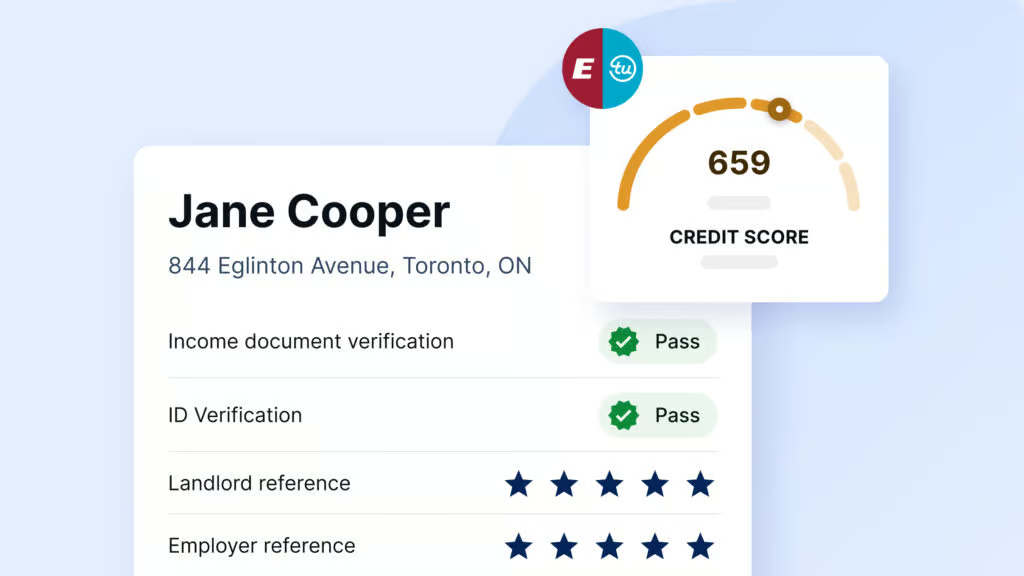
A common mistake is listing only the primary applicant when multiple adults are signing and sharing responsibility for the lease. Applicants can be screened with a Tenant Report to verify their credit, rental and employment history.
Section 2: Rental unit details
This section describes the rental unit being rented, including the full address, property type and any parking spaces included.
Document parking specifically, including the spot number and location, not just a general note that parking is included.
For condo units, the tenant may also need to follow condo corporation rules. Landlords must provide a copy of applicable condo rules with the lease.
Section 3: Notice and contact information
This section sets out where formal notices and documents should be sent. Landlords must provide a mailing address.
Phone numbers and email addresses can also be included for day-to-day communication, emergencies or electronic notices where allowed. Include formal contact details in the lease for all parties.
Lease term and rent
Section 4: Term of tenancy agreement
This section sets out when the tenancy starts and what type it is. Fixed term tenancies have a set start and end date. Month to month tenancies continue until written notice is given to terminate the agreement.
One misconception: a fixed term lease ending doesn't mean the tenant has to leave. In Ontario, the tenancy typically continues on a month to month basis unless written notice is given or both parties agree otherwise.
Section 5: Rent
This section covers the total rent, due date and what's included. All three should be clearly stated.
If base rent is $2,000, parking is $75 and utilities are $100, the total is $2,175, and each component should be listed clearly. Include the due date, payment method and any fees that apply to returned payments. Leaving this section unclear often leads to disputes.
To manage payments, landlords and tenants can use SingleKey's Rent Collection tool to automate monthly rent and track payments in one place.
Section 7: Rent discounts
If you're offering the tenant a rent discount, such as a free first month or a temporary reduction, document it here. Include how long the discount lasts and what the full rent will be once it ends.
Unclear discount terms create confusion. If the tenant believes the discounted amount is the ongoing rent, they may dispute rent increases later.
Deposits and insurance
Section 8: Rent deposit
This section records the rent deposit. In Ontario, a rent deposit can only be applied to the last month of rent. It cannot be used as a general security deposit.
Damage deposits, pet deposits and cleaning deposits are not permitted under the Residential Tenancies Act. Stating the purpose of the deposit in the lease prevents disputes when the tenancy ends. For added protection against missed payments, lease breaks or property damage, landlords can enrol in SingleKey's Rent Guarantee.
Section 9: Key deposit
Collecting a deposit for keys, fobs or access cards is permitted, but the amount cannot exceed the actual replacement cost.
The deposit must be returned when the tenant moves out and returns the keys or access devices.
Section 11: Tenant insurance
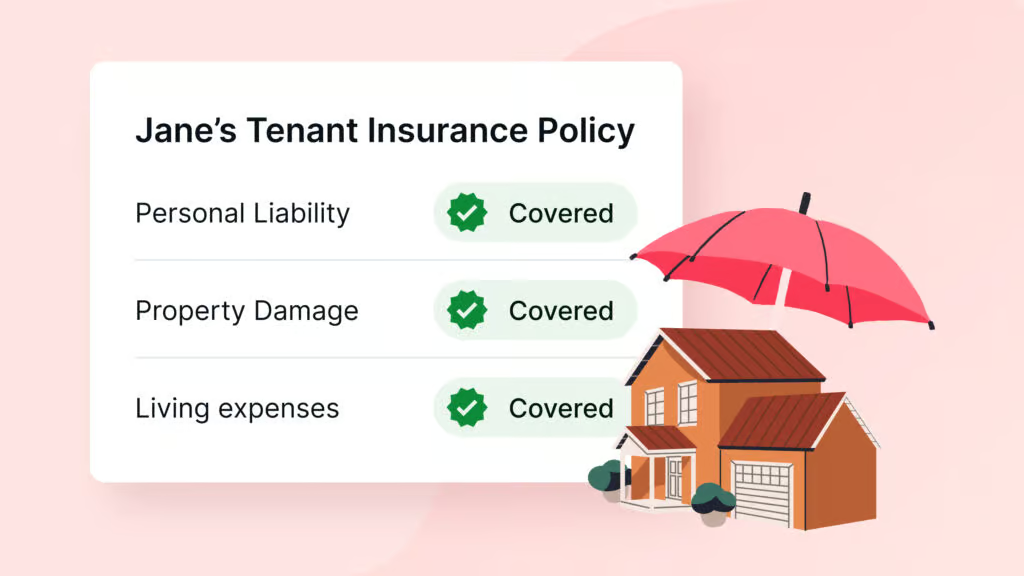
Landlords can require tenants to carry liability insurance but must specify the type and minimum coverage level. Liability insurance is not the same as contents insurance, which protects the tenant's belongings.
Contents insurance cannot be made mandatory. Tenants decide for themselves whether to purchase it. Affordable liability and contents coverage is available through SingleKey's insurance partner, Walnut.
Services, utilities, rules, maintenance and subletting
Section 6: Services and utilities
State what's included in the rent and what the tenant pays separately. Electricity, heat, water, parking, storage, air conditioning and laundry should each be accounted for.
Every utility and service needs a clear answer in the lease. Vague utility terms lead to disputes.
Section 10: Smoking
Establish smoking rules before the tenant moves in. The lease must outline where smoking is and isn't permitted in the unit or on the property.
Ontario law already prohibits smoking in indoor common areas, including hallways, stairwells and lobbies. Any property specific rules should be written clearly and comply with Ontario law.
Section 12: Changes to the rental unit
Clarify what changes the tenant can make without asking first. Hanging pictures is typically fine. Painting or installing shelves usually requires consent.
If prior approval is required for changes, state this clearly in the lease. Keep the language specific enough that routine use of the unit isn't unintentionally restricted.
Section 13: Maintenance and repairs
The landlord is responsible for keeping the property in good repair and meeting health and safety standards. The tenant is responsible for keeping the unit reasonably clean and paying for any damage caused by them or their guests.
Landlords can't use the lease to shift repair obligations onto the tenant. The Landlord and Tenant Board won't enforce those terms.
Section 14: Subletting and assigning
If the tenant wants to sublet or assign the tenancy, they need the landlord's permission, but the landlord should not refuse without a reasonable reason.
Avoid wording that suggests the tenant can never sublet or assign under any circumstances, since that may conflict with Ontario tenancy law.
Additional terms, changes and signatures
Section 15: Additional terms
Section 15 is for rules specific to your unit or property that aren't covered elsewhere in the lease. Examples include garbage disposal rules, shared space policies, guest parking and smoking areas.
Additional terms should be specific, practical and permitted under Ontario law. Terms to avoid include damage deposits, pet deposits, cleaning deposits, blanket pet bans without valid condo rules, restrictions on guests or roommates, and repairs that are legally the landlord's responsibility.
If a term conflicts with the Residential Tenancies Act, a signed lease doesn't make an illegal term enforceable.
Section 16: Changes after signing
Any changes after the lease is signed require written agreement from both parties.
For example, if you later agree to add a parking spot or adjust an included service, document the change. Verbal agreements are hard to enforce if there's a dispute.
Section 17: Signatures
Every landlord and tenant on the lease must sign. Electronic signatures are permitted if both sides agree.
Once the tenant signs, the landlord has 21 days to provide a signed copy. Sending the final copy should be part of completing the lease, not a follow-up task.
What to check before sending your lease
Before sharing the lease with tenants, review it carefully. Small errors around names, rent, deposits or custom terms can lead to disputes once the lease is signed.
- Every tenant is listed by full legal name.
- The rental unit address and parking details are complete.
- The tenancy start date and lease type are clear.
- The total rent is listed clearly, with components broken out.
- Any extra lawful charges are explained.
- Any rent discount is documented with a clear end date.
- No damage deposit, pet deposit or cleaning deposit is included.
- Additional terms do not conflict with Ontario rental law.
- All landlords and tenants have signed.
- The tenant receives a signed copy after completion.
Complete your Ontario lease online
Create your lease using the most up-to-date Ontario standard lease form. Build it, sign it and send it. All online, for free.
Get startedAlso worth reading: Ontario lease agreement: What landlords need to know (2026)
The Ontario standard lease is updated periodically. Always confirm you're using the current form before sending it to a tenant.