

- British Columbia
- 25 Minute Read
How to Increase Rent in BC in 2026
Updated on Jul 29, 2026
Written By:
Verified By:
If you’re raising rent in BC in 2026, there are four rules you need to get right.
Miss any one of these requirements and your rent increase could be delayed or become unenforceable.
This guide explains how to calculate the maximum increase, choose the correct effective date, complete the required notice and avoid the mistakes that most commonly cause problems for landlords.
Are you a tenant checking an increase you received? Jump to the tenant checklist.
BC rent increase limits by year
The maximum rent increase in BC is 2.3% for 2026, down from 3.0% in 2025. Use the limit for the year in which the new rent begins, even if the notice was prepared or served during the previous year.
Swipe horizontally to view the complete table.
| Year | Maximum standard increase |
|---|---|
| 2026 | 2.3% |
| 2025 | 3.0% |
| 2024 | 3.5% |
| 2023 | 2.0% |
| 2022 | 1.5% |
| 2021 | 0% |
Annual limits don’t carry forward. If you didn’t increase the rent in 2025, the unused 3.0% can’t be added to the 2026 increase.
Does the 2.3% limit apply to your rental?
For 2026, the BC rental increase limit covers most existing residential tenancies under the Residential Tenancy Act, including many rented houses, apartments, condominiums and basement suites.
Different rules or exclusions may apply to certain types of housing, including commercial properties, some co-operative or non-profit housing arrangements, assisted-living accommodations and manufactured-home sites.
If you’re unsure whether your rental is covered, review the province’s current tenancy laws and rules before preparing a notice.
How to calculate a rent increase in BC for 2026
For most residential tenancies covered by BC’s Residential Tenancy Act, the maximum allowable rent increase in BC for 2026 is 2.3%.
The increase is always calculated from your tenant’s current lawful rent, not what similar properties rent for today. For example, if your tenant pays $2,000 per month but comparable units now rent for $2,400, you still calculate the increase using $2,000.
2026 rent increase examples
Swipe horizontally to view the complete table.
| Current monthly rent | Maximum monthly increase | Maximum new rent |
|---|---|---|
| $1,000 | $23.00 | $1,023.00 |
| $1,250 | $28.75 | $1,278.75 |
| $1,500 | $34.50 | $1,534.50 |
| $1,750 | $40.25 | $1,790.25 |
| $2,000 | $46.00 | $2,046.00 |
| $2,500 | $57.50 | $2,557.50 |
| $3,000 | $69.00 | $3,069.00 |
Don’t round the result up. Even a few extra cents above the legal maximum can make the notice incorrect. If the calculation comes to $28.75, the increase must remain $28.75, not $29.
You don’t have to take the full 2.3% increase. However, any unused portion disappears; you can’t apply it to a future year’s increase.
Should you take the full 2.3% increase?
The law sets the maximum increase, not the recommended one.
For some landlords, taking the full 2.3% makes perfect sense. Rising property taxes, insurance premiums, maintenance costs and repairs all add pressure to operating costs, and the annual increase helps offset those expenses.
For others, a smaller increase may be the better long-term decision. A reliable tenant who pays on time, communicates well and looks after the property is often worth more than the maximum allowable increase. On a unit renting for $2,000 per month, the full 2.3% increase adds $552 over an entire year. By comparison, even one month of vacancy can easily cost more than that once you factor in lost rent, cleaning, advertising and turnover costs.
Experienced landlords often look at the bigger picture rather than automatically increasing rent by the maximum every year.
Whatever amount you choose, remember one important rule: unused room doesn’t carry forward. If you increase rent by 1.5% in 2026, you can’t add the remaining 0.8% to next year’s increase.
When can a rent increase take effect?
Once you’ve decided how much to increase the rent, the next step is choosing the correct effective date. BC requires two separate timing rules to be met:
- At least 12 months must have passed since the rent was established or last legally increased.
- Your tenant must receive three full months’ notice.
Both conditions must be satisfied before the increase can take effect.
First, confirm the 12-month rule
Start by identifying the date rent first became payable or, if there’s already been an increase, the effective date of the most recent legal rent increase.
If rent first became payable on June 1, 2025, the earliest possible increase is June 1, 2026. If the last rent increase took effect on September 1, 2025, the next increase can’t begin before September 1, 2026.
Next, count the notice period
Your tenant must receive three full months’ notice before the increase begins. The month in which the notice is received does not count toward those three months.
For example, if rent is due on the first of each month and your tenant receives the notice at any point in January, the earliest effective date is generally May 1. February, March and April make up the required notice period.
This is where many landlords accidentally delay their rent increase. Different delivery methods have different legal “received” dates, and serving the notice only a day or two too late can push the effective date back by an entire month.
You can serve the notice before the 12-month anniversary
You don’t have to wait until the 12-month anniversary before serving the RTB-7. You can prepare and deliver the notice earlier, provided the effective date satisfies both timing requirements.
Before completing the form, confirm the three dates that determine whether your notice is valid:
- when rent was first established or last legally increased
- how you’ll deliver the notice
- when that delivery method is legally considered received
Prepare and serve the BC rent increase notice
Once you’ve confirmed the increase amount and chosen the correct effective date, you’re ready to prepare the official notice. Most problems come down to simple mistakes: using the wrong form, choosing the wrong date or overlooking the notice period.
Complete the RTB-7 form
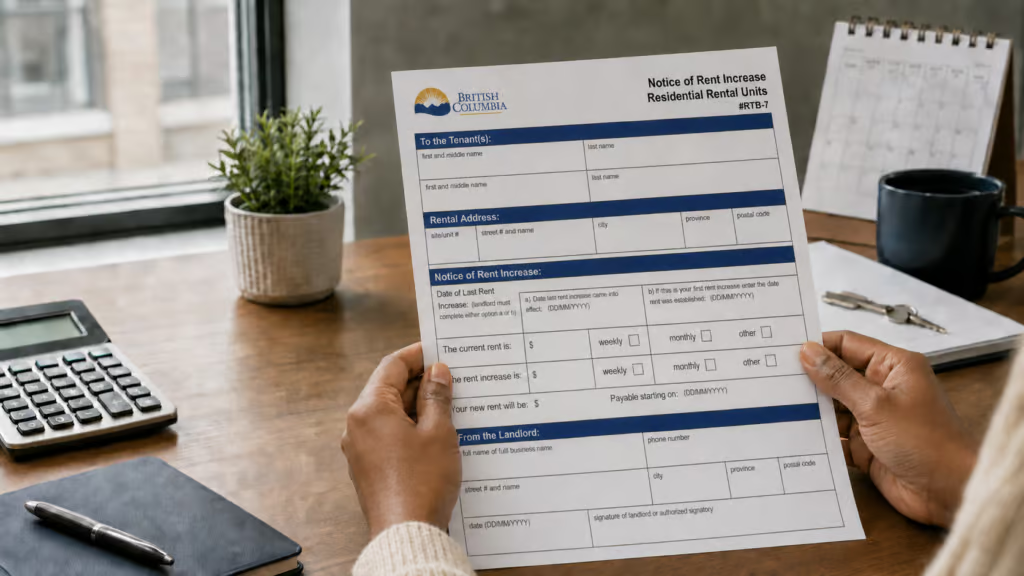
For a standard residential rent increase, you must use the official RTB-7 Notice of Rent Increase.
A text message, phone call, handwritten letter or email you’ve written yourself isn’t enough. You can send a separate message explaining the increase, but the legal notice must still be provided on the RTB-7.
The form asks for:
- the landlord’s name and contact information
- the tenant’s information
- the rental property address
- the current monthly rent
- the amount of the increase
- the new monthly rent
- the effective date
Before serving the notice, double-check that the math works. The current rent plus the increase should exactly equal the new monthly rent shown on the form.
Download the official RTB-7 Notice of Rent Increase
If you’re organizing your tenancy paperwork at the same time, review the rental documents you should keep on file for every BC tenancy.
Deliver the notice correctly
How you deliver the RTB-7 affects when your tenant is legally considered to have received it. That date is used to calculate the required three-month notice period.
- Handed directly to the tenant: considered received the same day.
- Ordinary or registered mail: considered received on the fifth day after mailing.
- Left in a mailbox or mail slot, or attached to the door: considered received on the third day after delivery.
- Email: considered received on the third day after sending, provided the tenant previously gave the landlord that email address for service under BC’s Residential Tenancy Act.
The RTB-7 instructions use a May 1 rent increase as an example. If you’re delivering the notice in person, January 31 would generally be the latest day you could serve it. If you’re mailing it, you’d typically need to send it by January 26 so it’s considered received before the deadline.
Those are the latest dates you should rely on, not the recommended ones. Whenever possible, serve the notice early so you have time to correct an incomplete form, an incorrect address or a delivery problem.
Keep proof of how and when the notice was delivered. Depending on the method, that might be a mailing receipt, delivery confirmation, sent email or dated record of personal service.
Send a simple explanation and update your records
The RTB-7 satisfies the legal requirement, but it isn’t particularly reader-friendly. A short message can help avoid confusion. Confirm the current monthly rent, the increase, the new monthly rent, when it takes effect and how the tenant can contact you with questions.
You don’t need to justify the increase or explain your rising expenses. A clear, factual explanation is usually all that’s needed. For an example, see our guide to writing a rent increase letter.
Once the increase takes effect, update your payment records and reminders. If you use SingleKey Rent Collection, update the payment schedule so the revised amount starts on the correct effective date.
Review the notice before serving it
Before you send the RTB-7, take one final pass through the details. Most invalid rent increases are caused by simple administrative mistakes that could have been caught with a quick review.
BC rent increase checklist
- I calculated the increase using the tenant’s current lawful rent.
- The increase does not exceed 2.3%.
- At least 12 months will have passed by the effective date.
- The tenant will receive three full months’ notice.
- I completed the current RTB-7 form.
- The delivery method and legal receipt date are correct.
- The rent calculation is accurate.
- The effective date is correct.
- I kept proof of service and a copy of the completed notice.
Common rent increase situations
The same rules apply in almost every tenancy. What changes is which rent amount and dates carry forward. Here are the situations landlords ask about most often.
You skipped last year’s increase
You can still increase the rent in 2026 if the timing and notice requirements are met. The maximum increase is still 2.3%, though. You can’t add the unused 2025 increase to this year’s amount.
The same principle applies if you chose less than the maximum in a previous year. Any unused percentage is lost; it doesn’t carry forward.
A fixed-term lease is ending
The end of a fixed-term lease doesn’t reset the rent or create a new opportunity to increase it. If the same tenant remains, whether under another fixed-term agreement or on a month-to-month tenancy, the normal annual rules still apply. The next increase is based on when rent was last established or legally increased, not when the lease expires.
For more information, review SingleKey’s guide to lease renewals for landlords.
The tenancy is now month to month
A month-to-month tenancy follows exactly the same rent increase rules. The annual percentage limit, 12-month waiting period, notice requirement and RTB-7 process all stay the same.
You recently bought the property
Buying a rental property doesn’t restart the rent increase schedule. The existing tenancy and its rent history transfer with the property.
Before preparing a notice, confirm when the previous owner last increased the rent. That date determines when the next increase can legally take effect.
Other situations that can affect a rent increase
Some questions depend on the tenancy agreement or the type of rental involved.
Utilities, parking and storage
If utilities, parking or storage are already included in the rent, changing how those services are charged can affect the total rent increase.
Simply calling something a separate fee doesn’t necessarily place it outside BC’s rent increase rules. Review the tenancy agreement before introducing a new charge or changing an existing one.
Additional occupants
Some tenancy agreements allow the rent to change when another occupant moves in. That only applies if the agreement already contains a valid clause allowing the adjustment.
A landlord cannot increase the rent simply because a minor joins the household or because an existing occupant turns 19.
Higher property expenses
Higher mortgage payments, insurance premiums, property taxes or repair costs don’t increase the standard annual rent limit.
In limited circumstances, landlords may be able to apply to the Residential Tenancy Branch for an additional increase, but approval must be granted before charging the higher amount.
Manufactured-home sites
Manufactured-home site tenancies follow different calculation rules in some situations. Although the standard 2026 increase is also 2.3%, the calculation may include part of certain increases in local government levies or regulated utility fees.
If you’re renting a manufactured-home site, use the province’s manufactured-home rent-increase guidance to calculate the correct amount rather than relying on the standard residential formula.
Can you increase rent above the 2.3% limit?
In most cases, no. For existing residential tenancies covered by BC’s Residential Tenancy Act, 2.3% is the maximum standard increase for 2026. There are only two situations where a landlord may be able to charge more:
- The tenant voluntarily agrees to a higher increase in writing.
- The Residential Tenancy Branch approves an additional increase through its formal application process.
A tenant is free to decline a proposed increase above the annual limit, and refusing should never affect the tenancy. If both parties agree, put the new monthly rent, increase amount, effective date and any other terms in writing. Both parties should sign, and the tenant’s consent must be genuine and voluntary.
The RTB may approve an increase above the annual limit in limited circumstances, such as certain capital expenses or extraordinary operating costs. Approval isn’t automatic. You’ll generally need invoices, financial records or other evidence, and you can’t collect the higher rent unless the application is approved.
If you’re considering this route, review the province’s additional rent-increase guidance before applying.
BC’s annual rent increase limit follows the tenancy, not the property. Once an existing tenancy legally ends and a new tenant signs a new rental agreement, landlords can generally set a new starting rent. You can’t end a tenancy simply to charge a higher rent, though. Tenancies must end for a lawful reason, and ending one in bad faith can carry significant penalties.
If you’re a tenant checking an increase you received
Before paying the higher rent, work through these three checks. They’ll help you confirm whether the increase appears to follow BC’s standard rules.
-
Check the amount
Start with your current monthly rent and multiply it by 1.023. That gives you the maximum new monthly rent for a standard 2026 increase. If the notice is higher, check whether you agreed to a larger increase in writing or your landlord received RTB approval. If neither applies, ask how the amount was calculated.
-
Check the timing
At least 12 months must have passed since your rent was established or last legally increased, and you must receive three full months’ notice. Also check how the notice was delivered. The legal receipt date may be several days after it was sent, which can affect whether enough notice was provided.
-
Check the form
Your landlord should use the official RTB-7 Notice of Rent Increase. It should include your current rent, the increase amount, your new monthly rent, the effective date, the landlord’s information and the rental property address. A text message, phone call or ordinary letter doesn’t replace the RTB-7.
If the amount, timing and form all follow the rules, the new rent generally becomes payable on the effective date.
What to do if something appears incorrect
Start by checking the calculation again and confirming when your last increase took effect. If you still believe there’s a problem, contact your landlord in writing, explain what appears to be incorrect and ask whether the notice needs to be corrected.
If you can’t resolve the issue together, the Residential Tenancy Branch’s rent-increase guidance explains the current rules and provides information about dispute resolution services.
Don’t stop paying rent or reduce your payments until you’ve confirmed what the law requires. Withholding rent without following the proper process can create a separate dispute, even if the original notice contains an error.
If you’ve already paid an unlawful increase, you may be able to recover or deduct the overpayment. Check the RTB’s current guidance before changing any future rent payments.
Frequently asked questions about BC rent increases
How much can a landlord increase rent in BC in 2026?
For most existing residential tenancies, the maximum standard increase is 2.3% of the current lawful rent.
What is the BC rent increase form?
The approved form is the RTB-7 Notice of Rent Increase. It records the current rent, the increase, the new rent and the effective date.
How much notice is required for a rent increase in BC?
Tenants must receive at least three full months’ notice before the increase takes effect. The month in which the notice is received doesn’t count, and some delivery methods add additional receipt time.
Can I increase rent if I skipped last year’s increase?
Yes, provided you meet the timing and notice requirements. However, you can only use 2026’s 2.3% limit. Any unused increase from previous years is lost.
Can I increase rent when a fixed-term lease ends?
Not automatically. If the tenancy continues with the same tenant, the normal annual rent increase rules still apply.
Can I increase rent because my mortgage or expenses went up?
No. Higher mortgage payments, insurance premiums and property taxes don’t change the annual limit. Charging more than 2.3% generally requires either the tenant’s written agreement or RTB approval.
Can I send a rent increase notice by email?
Yes, provided the tenant previously agreed to receive legal notices by email under BC’s rules.
Emailed notices aren’t generally considered received until the third day after they’re sent, so build that timing into your notice period.
Can I increase rent retroactively?
No. Rent increases only apply after the required notice period and can’t be backdated.
You’re ready to prepare your rent increase
Once you’ve confirmed the amount, timing and notice requirements, completing a BC rent increase is straightforward. Calculate the increase using your tenant’s current lawful rent, choose an effective date that satisfies both timing rules and serve the official RTB-7 with enough notice.
Before sending it, review the calculation, dates and delivery method one last time. Those are the three areas where landlords are most likely to make mistakes.
Before your next tenant
Annual rent increases matter, but they’re only one part of protecting your rental property’s long-term returns. The tenant you choose will often have a much bigger financial impact than the difference between taking a 1.5% increase or the full 2.3%.
A reliable tenant can mean fewer missed rent payments, less property damage, lower turnover and fewer costly disputes. With SingleKey Tenant Screening, you can review an applicant’s identity, credit history, income, employment, rental history, references, eviction records and public records before making a decision.
You can also collect consistent information from applicants using SingleKey’s BC rental application form.
BC rent increase forms and resources
Learn more about resources in British Columbia
Learn more about Rent Increase Guidelines
 You Are Reading
 Other Blog Posts In This Series
- How Much Can a Landlord Raise the Rent in Alberta in 2025
- How to Increase Rent in BC in 2026
- Manitoba 2025 Rent Increase Guidelines
- New Brunswick 2025 Rent Increase Guidelines
- Newfoundland and Labrador 2025 Rent Increase Guidelines
- Northwest Territories 2025 Rent Increase Guidelines
- Nova Scotia 2025 Rent Increase Guidelines
- Nunavut 2025 Rent Increase Guidelines
- Ontario rent increase guidelines for 2026 and 2027
- Prince Edward Island 2025 Rent Increase Guidelines
- Quebec 2025 Rent Increase Guidelines
- Saskatchewan 2025 Rent Increase Guidelines
- Yukon 2025 Rent Increase Guidelines