

- 16 Minute Read
Rental Guarantors: A guide for Canadian renters
Updated on Sep 2, 2026
Written By:
A guarantor can help you qualify for an apartment or home when you can afford the rent but your application doesn't meet a landlord's usual credit, income or rental-history requirements.
You may have already been asked to provide one. Or you may be wondering whether a guarantor could strengthen your application because you're new to Canada, have limited credit history, or recently started a job or earn income that's harder to document.
What is a guarantor?
A guarantor, sometimes called a lease guarantor, rent guarantor, or apartment guarantor, is a person or company that agrees in writing to take responsibility for certain financial obligations if the tenant does not meet the terms of the lease.
Depending on the agreement, that responsibility may include unpaid rent, property damage, or costs associated with enforcing the lease. You remain responsible for paying rent and following the terms of your tenancy, while the guarantor gives the landlord another way to recover covered losses if you default.
Traditionally, renters have relied on a parent, relative, or close friend. That person may need to provide proof of income, consent to a credit check, and sign either the lease or a separate guarantee agreement.
How does a guarantor work for rent?
A guarantor for rent only becomes responsible if you don't meet your obligations. In practice, the arrangement usually works like this:
- The landlord tells you a guarantor is required, usually after reviewing your application.
- The guarantor completes the landlord's checks, which may include a credit check and proof of income.
- The guarantor signs the lease or a separate guarantee agreement setting out what they're responsible for.
- You pay rent and follow the lease as normal. Nothing happens with the guarantee unless you default.
- If you don't pay or you breach the lease, the landlord can pursue the guarantor for the amounts covered by the agreement.
How long the guarantee lasts depends on the document. Some end when the initial lease term ends. Others continue through renewals or into a month-to-month tenancy, which is why a guarantor should read the agreement carefully before signing.
Why might a landlord ask you for a guarantor?
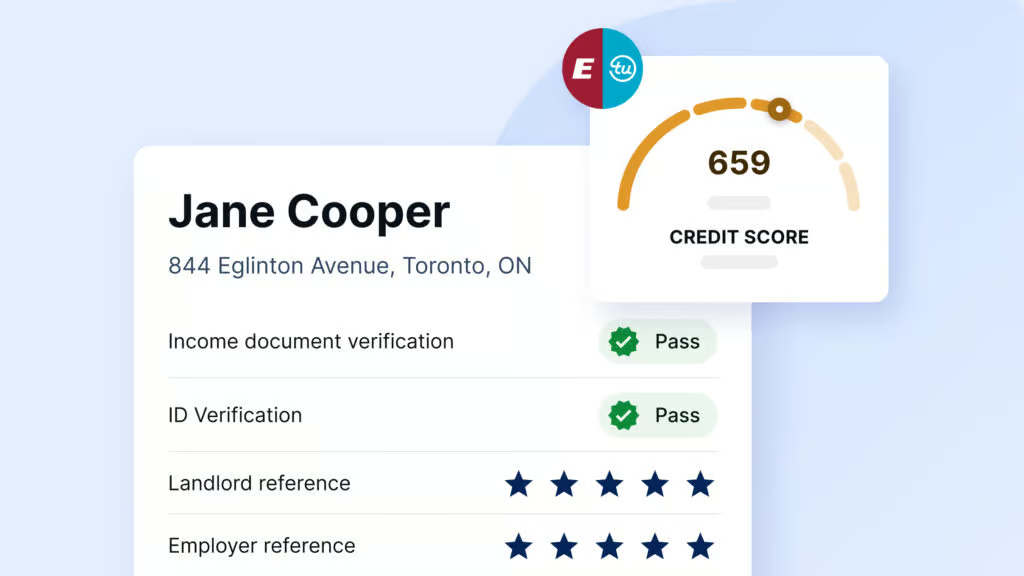
Landlords usually assess rental applications using some combination of income, employment, credit history, rental history, and references, often through a tenant screening report. They may ask for a guarantor when part of that financial picture is missing, difficult to verify, or outside their usual approval criteria.
You may be asked for a guarantor if:
- You have limited Canadian credit history.
- You're a student, recent graduate, or first-time renter.
- You recently started a job or are still in a probationary period.
- You're self-employed or earn variable income.
- You have previous credit issues.
- Most of your financial or rental history is outside Canada.
- You're applying with roommates and one person has a weaker financial profile.
- The rent would take up a large share of your household income.
Sometimes the concern is proof rather than affordability. You may have strong credit in another country that doesn't appear on a Canadian credit report, substantial savings but limited employment history, or enough annual income to afford the rent without receiving consistent monthly paycheques.
In other cases, the landlord may identify a risk, such as past payment problems or rent that would take up a large portion of your household income. A guarantor doesn't erase that concern, but the added financial protection may make the landlord more comfortable approving your application.
Guarantor vs. co-signer: what's the difference?
Landlords and renters sometimes use "guarantor" and "co-signer" interchangeably, but they can describe different legal arrangements.
A guarantor on a lease often signs a separate agreement and becomes responsible if the tenant defaults, while a co-signer may sign the lease and share responsibility for its obligations from the beginning.
However, there is no single Canada-wide rule that makes every guarantor or co-signer agreement identical. The responsibilities set out in the document matter more than the title being used. If you're not sure which one you're being asked for, our breakdown of the roles of a co-signer and a guarantor covers the distinction in more detail.
Who can be a guarantor for a rental or apartment?
There is no single Canada-wide qualification standard for guarantors. Each landlord decides what they will accept, provided their requirements comply with applicable provincial and human rights laws.
A landlord may look for someone who:
- Has reached the age of majority in their province.
- Has stable income or sufficient assets.
- Has good credit and can pass the landlord's screening process.
- Lives in Canada or has established Canadian financial history.
- Is willing to provide identification and financial documents.
- Understands and accepts the obligations in the agreement.
What does a guarantor need to provide?
Requirements vary by landlord, but a guarantor is usually asked for:
- Government-issued identification.
- Proof of income, such as recent pay stubs, a letter of employment, or tax documents.
- Consent to a credit check.
- Proof of savings or assets, in some cases.
- A signed lease or separate guarantee agreement.
Before your guarantor hands anything over, it's fair to ask the landlord who will hold those documents and how they'll be stored. Your guarantor is sharing sensitive financial information with someone they may never meet.
Can a guarantor be a family member?
Yes. A parent is the most common choice, but a sibling, grandparent, aunt, uncle, or other relative can act as your guarantor if they meet the landlord's requirements. The relationship matters less than whether the person qualifies financially and is willing to sign.
The guarantor doesn't have to be related to you at all. Some landlords will accept a close friend or another qualified person. Ask the landlord whether they have any restrictions before you approach someone.
Can a guarantor live outside Canada?
Some landlords will accept an international guarantor and some won't. If the person lives outside Canada, confirm that the landlord will accept them before asking them to provide personal or financial documents.
A landlord may be hesitant because verifying income and credit in another country is harder, and enforcing the agreement across borders may not be practical. This comes up often for newcomers and international students whose closest financial support is outside Canada.
Can a company act as your guarantor?
Yes. Professional guarantor services, also described as third party guarantors, institutional guarantors, or co-signer services, take on that role in place of a person. Instead of asking someone you know to accept the financial risk, you apply to the company, they assess your finances, and if you're approved they back your lease under a set of program terms.
What these services offer varies. The main differences are the total cost, how eligibility is assessed, what protection the landlord receives, and whether the landlord has to agree to participate.
Do you need a personal guarantor?
Before asking someone to guarantee your lease, find out exactly what the landlord is concerned about.
Personal guarantor requirements vary by landlord, but they commonly look at income, credit history, residency, and whether the person could take on the lease obligations if needed.
Consider asking:
- Which part of my application doesn't meet your requirements?
- Would additional proof of income or savings address the concern?
- Are you asking for a guarantor or a co-signer?
- What would that person be required to sign?
- What income, credit, or residency requirements would they need to meet?
- Would you consider a professional co-signer service?
Depending on the concern, additional financial documents may be enough to strengthen your application. These could include bank statements, proof of savings, a letter of employment, international credit information, proof of consistent rent payments, or a reference from a previous landlord. Landlords take different approaches to income verification on a rental application, so ask what would actually satisfy them before you start gathering paperwork.
If the landlord still requires additional backing, you'll need either a qualifying personal guarantor or a professional alternative. Before signing, a personal guarantor should confirm which costs they could be responsible for, whether there is a maximum amount, and how long the guarantee continues, including after a lease renewal or conversion to month-to-month.
How to find a guarantor if you don't have one
Finding a guarantor for apartment or house rentals starts with one question: what will the landlord actually accept? Ask whether they want a personal guarantor, a professional co-signer, or either. The answer changes where you look next.
Not everyone has a parent, relative, or friend who qualifies or feels comfortable accepting the risk.
If you're trying to find a guarantor and don't have an obvious person to ask, widen the question beyond your immediate family. Someone else in your network may qualify, or a professional service may be able to fill the role instead.
Your family may live outside Canada, the people closest to you may have financial commitments of their own, or you may prefer to keep your housing arrangements separate from your personal relationships.
You may also have someone willing to help who doesn't meet the landlord's requirements. For example, a landlord may not accept someone who lives outside Canada or doesn't have sufficient Canadian income or credit history.
Personal guarantor vs. guarantor services
Swipe horizontally to view the complete table.
| Personal guarantor | Guarantor services |
|---|---|
| Usually a parent, relative, or friend | They provide professional lease backing |
| The landlord decides whether the person meets their requirements | They assess you through their eligibility process |
| The guarantor may need to share financial documents with the landlord | You submit the required documents through the guarantor |
| Places a potentially significant financial obligation on someone you know | Keeps the arrangement business-based |
| Someone outside Canada may not qualify | Designed for qualifying renters in the Canadian rental market |
| The landlord must accept the individual guarantor | The landlord must approve the application and agree to the program |
| The guarantor's responsibility depends on the agreement they sign | The landlord receives protection under the program terms |
A personal guarantor may work well if you know someone who qualifies, understands the commitment, and is comfortable accepting the risk. If you don't, guarantor services may help strengthen your application without placing that obligation on a friend or family member.
How to choose a professional guarantor service
There is no single best tenant guarantor service for every renter. Guarantor companies differ in what they charge, who they approve, and what the landlord actually receives, so compare those before you apply rather than after.
Look at the total cost, how eligibility is assessed, what protection the landlord receives, and whether the landlord must agree to the arrangement.
It is also worth checking whether you can complete approval before you find a rental. That way, you are not scrambling to collect documents after you have found a place you want.
Frequently asked questions
How much does a guarantor cost?
A personal guarantor doesn't charge you anything. They're accepting financial risk rather than selling you a service.
Professional guarantor services do charge a fee, and pricing varies between providers. It's usually structured either as a percentage of your annual rent or as an amount tied to your monthly rent.
Can students use guarantor services?
Students can typically apply, including those with limited employment, credit, or rental history. Depending on your circumstances, you may need to provide proof of enrolment, income or savings, and a valid study permit depending on the services.
Can newcomers to Canada apply?
Yes. Guarantor services can help eligible renters whose financial or rental history may not yet appear in Canadian screening systems. They may consider qualifying income or savings alongside the information available on your Canadian credit report, and you may also need to provide a valid work or study permit.
Can I qualify with limited or bad credit?
Possibly. Your credit report forms part of the review, but we don't assess you based on your credit score alone. Your income, savings, proposed rent, and overall financial situation are also considered, although significant credit problems can still affect your eligibility.
Can guarantor services help me avoid paying several months of rent upfront?
It may provide an alternative when a landlord wants more financial reassurance and would otherwise ask you to voluntarily offer a large amount of prepaid rent. However, the landlord must agree to participate, and provincial rules affect what deposits or prepaid rent a landlord can request.